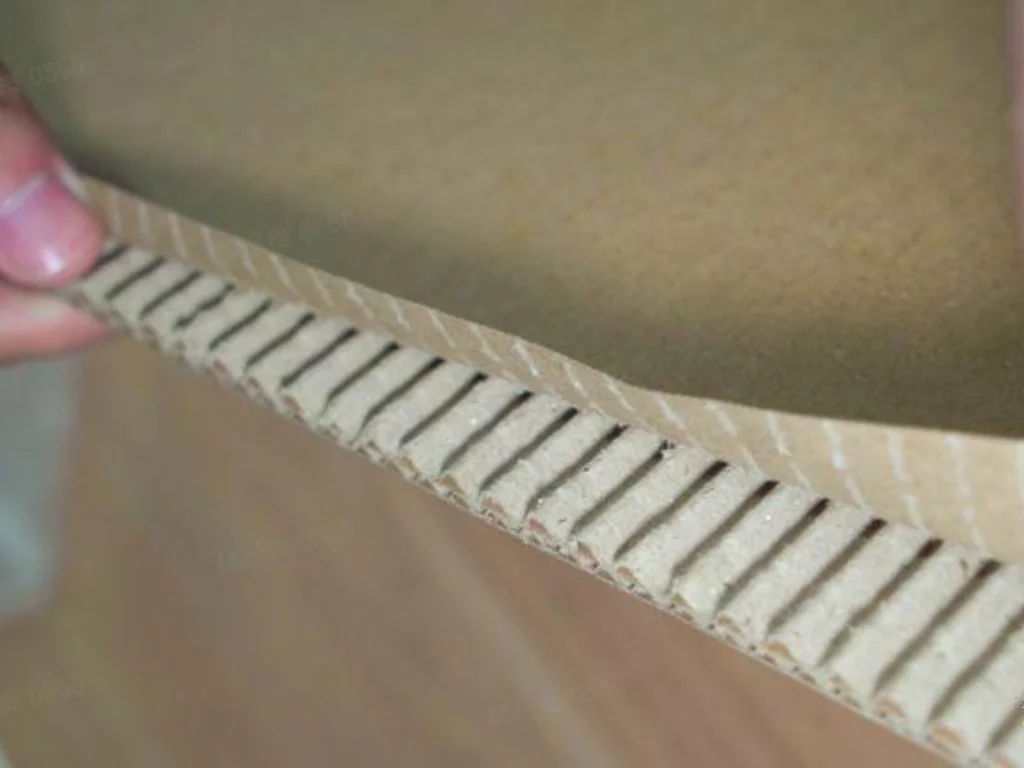
Struggling to decide on the right flute profile for your corrugating rolls? Choosing incorrectly can lead to production issues and wasted material. It's a critical decision that impacts your final product quality.
The best choice depends on your goals. Standard profiles1 offer proven stability and reliability, making them a safe, conservative option. Custom profiles allow for performance enhancements and can solve specific production problems, but they carry a higher risk of instability.

Choosing the right flute profile is one of the most important decisions you'll make for your corrugated board production line. It directly affects everything from board strength to runnability and even your raw material consumption. In my 30+ years in this industry, I've seen clients succeed with both standard and custom profiles. The key is understanding what each option brings to the table. Let's break down the details so you can make the best choice for your factory.
What Are the Benefits of Sticking with a Standard Flute Profile?
Are you worried about production interruptions and unforeseen problems? A new, untested flute profile can feel like a gamble, potentially causing costly downtime and quality control headaches.
Standard flute profiles are your safest bet for consistent, reliable production. They are based on mature, proven designs that have been refined over decades. This means you get predictable performance with almost no risk of unexpected issues, ensuring smooth and stable operations.
When we talk about "standard" profiles, we're referring to the common flute types you see everywhere: A, B, C, E, and F. These designs are the backbone of the industry for a reason. They work, and they work well. I remember a client in Mexico who was hesitant to try anything new. Their entire business was built on supplying consistent, reliable boxes to the agricultural sector. For them, stability was everything. We supplied them with our standard C-flute rolls, and they have been running them without a hitch for years. The predictability of a standard profile means your operators know what to expect, your paper works well with it, and the final board characteristics are consistent. This is the conservative, "if it ain't broke, don't fix it" approach. It's perfect for factories that prioritize uptime and consistent quality over pushing the limits of performance.
Standard Profile Characteristics
| Feature | Description | Implication for Production |
|---|---|---|
| Proven Design | Decades of use and refinement in the industry. | High reliability and predictability. |
| Wide Compatibility | Works well with a broad range of paper grades and machinery. | Fewer compatibility issues with raw materials. |
| Lower Risk | Minimal chance of unexpected issues like poor bonding or board crush. | Ideal for risk-averse operations. |
| Consistent Output | Delivers predictable board strength and characteristics. | Ensures stable product quality for your customers. |
When Should You Consider a Custom Flute Profile?
Are your standard profiles holding you back? You might be facing challenges like needing stronger board without using heavier paper, or dealing with persistent mechanical vibrations that hurt quality.
A custom flute profile is the solution when you need to solve a specific problem or gain a competitive edge. By modifying the tooth geometry, we can enhance board properties like ECT or FCT, improve runnability, or even eliminate issues like machine resonance.
Custom profiles are where things get exciting. This is where we, as roll manufacturers, can act as true partners and problem-solvers. A few years ago, a customer in South Africa came to us with a unique problem. They were experiencing a terrible mechanical resonance at certain speeds on their single facer. It was causing chatter marks on the board and forcing them to run slower, killing their productivity. After analyzing their machine data, we designed a custom flute profile with a slightly altered pitch. This change shifted the machine's natural frequency, completely eliminating the vibration issue. They could run at full speed again. This is the power of customization. It's not just about being "aggressive" or "radical." It's about targeted engineering to solve a specific, costly problem. Another common reason for customization is to optimize the Take-up Ratio (TUR)2, allowing you to produce board with the desired strength using less paper, which saves a significant amount of money over time.
Custom Profile Applications
| Goal | Customization Strategy | Potential Outcome |
|---|---|---|
| Increase Board Strength | Modify flank angles and tip radius. | Higher Edge Crush Test (ECT)3 or Flat Crush Test (FCT)4 values. |
| Reduce Paper Consumption | Optimize the Take-up Ratio (TUR). | Lower raw material costs while maintaining board performance. |
| Solve Machine Issues | Adjust the flute pitch or overall geometry. | Eliminate mechanical resonance or improve glue application. |
| Improve Runnability | Fine-tune the profile for specific paper types. | Higher production speeds and less web breakage. |
How Do You Decide Between Standard and Custom?
Making the final call can feel overwhelming. Do you play it safe with a standard profile or take a calculated risk on a custom design that could offer big rewards?
The decision comes down to your primary business objective. If your top priority is stable, uninterrupted production with predictable quality, choose a standard profile. If you need to solve a specific problem or optimize performance for a competitive advantage, a custom profile is the better path.
To make the right choice, you need to have an honest conversation about your production goals and your tolerance for risk. I always ask my clients a few key questions. First, what is your biggest pain point right now? Is it downtime, paper costs, board quality, or something else? If the answer is "we just need to run smoothly," a standard profile is almost always the right answer. It provides a solid, reliable foundation. However, if they say, "we need to make our lightweight board stronger to win a new contract," or "we're losing money because we can't run our machine at top speed," then the door to custom profiles opens. It becomes a strategic investment. A custom profile is a tool. You don't use a specialized tool for a simple job, but for a complex problem, it's essential. Think of it as a partnership with your roll manufacturer. A good supplier won't just sell you a custom roll; they will work with you to analyze your needs and engineer a solution that achieves a specific, measurable goal.
Decision-Making Framework
| Factor | Consider a Standard Profile If... | Consider a Custom Profile If... |
|---|---|---|
| Primary Goal | You prioritize stability, consistency, and maximum uptime. | You need to solve a specific problem (e.g., resonance, strength). |
| Risk Tolerance | You are risk-averse and prefer proven, predictable results. | You are willing to innovate to gain a performance or cost advantage. |
| Operational Challenge | Your production is generally smooth without major issues. | You face persistent issues that standard profiles can't solve. |
| Market Position | You compete on reliability and consistent supply. | You compete on performance, innovation, or cost leadership. |
Conclusion
Ultimately, choose standard profiles for reliable stability and custom profiles for targeted problem-solving and performance enhancement. Your specific production goals should guide your decision for the best results.
Explore why standard profiles are a safe choice for consistent and reliable production. ↩
Understand the importance of TUR and how it can be optimized with custom flute profiles. ↩
Find out how flute profiles can influence ECT values and board strength. ↩
Learn about FCT and how flute profiles can impact these test results. ↩