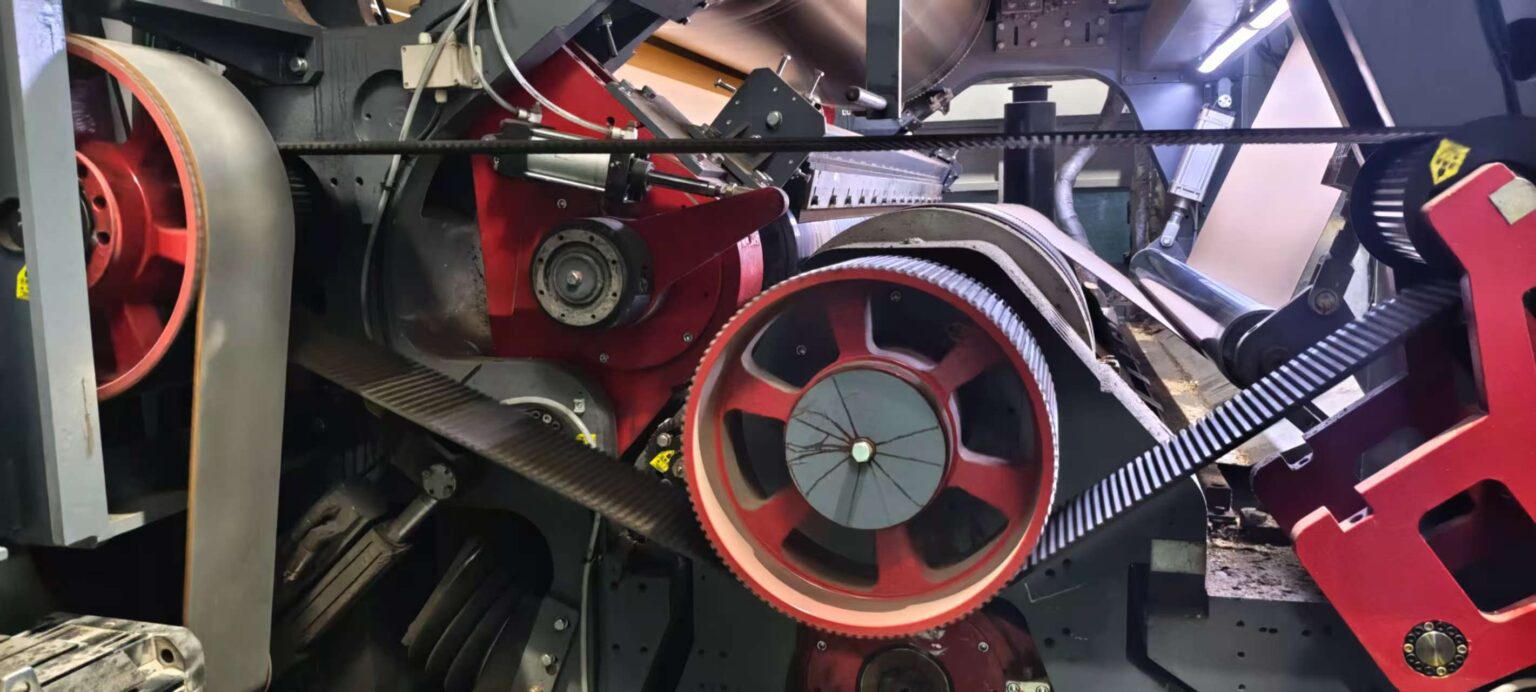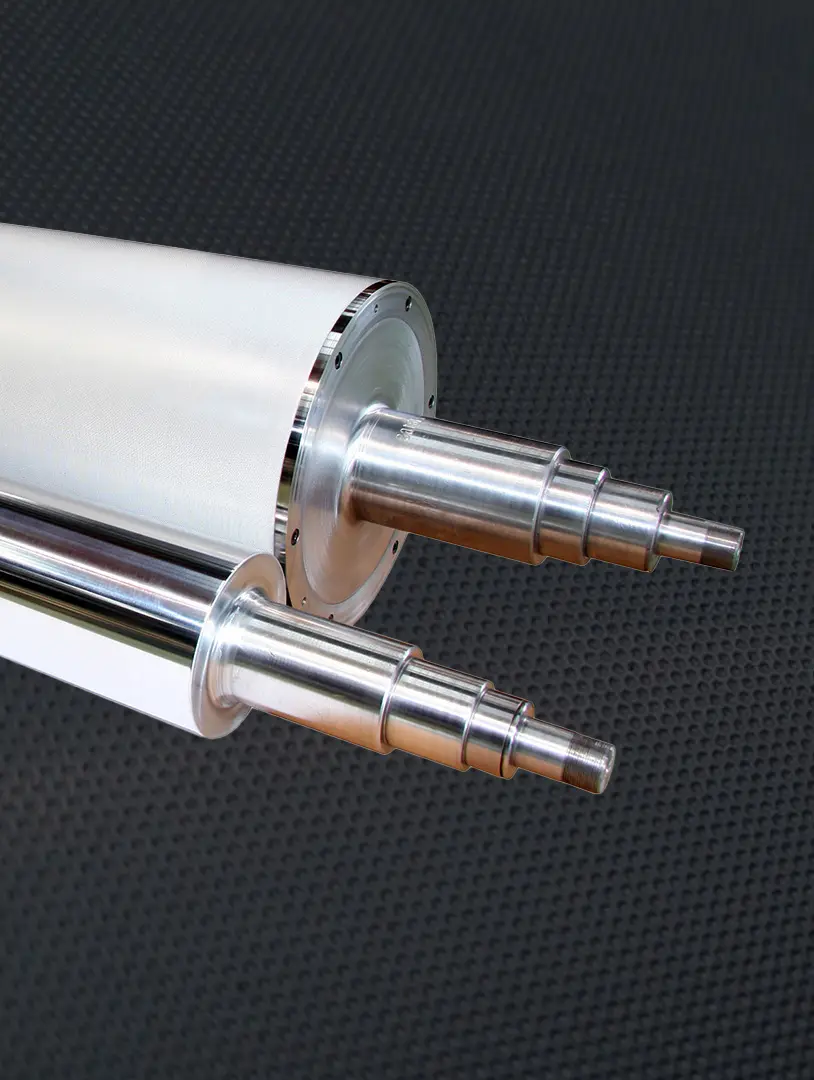
In a corrugator single facer, the Pressure Roll is a critical component that directly affects bonding quality and board strength. By applying controlled pressure between the fluted medium and linerboard, the pressure roll ensures reliable adhesion and consistent corrugated board production.
What Is a Pressure Roll?
A pressure roll is positioned after the corrugating rolls and glue roll within the single facer system. Its primary function is to press the glued flute tips against the linerboard, creating a strong bond that forms the final corrugated board structure.
-scaled.png "Glue Roll Cells")
Key Functions of a Pressure Roll
- Ensure firm bonding between medium and linerboard
- Promote adhesive penetration into paper fibers
- Improve board strength and bonding consistency
- Support stable high-speed corrugator operation
How Does a Pressure Roll Work?
The bonding process typically involves three stages:
1. Preheating
Before entering the bonding zone, the linerboard passes through a preheater. Heat softens the paper fibers and prepares the surface for effective adhesive penetration.
2. Pressure Bonding
The pressure roll applies controlled force, pressing the linerboard against the glued flute tips. This contact allows the starch adhesive to spread evenly across the bonding area.
3. Adhesive Penetration and Setting
Under proper pressure and temperature conditions, the adhesive penetrates the paper fibers and creates a strong mechanical bond, improving overall board performance.
Why Is Pressure Control Important?
Pressure settings have a direct impact on corrugated board quality.
Insufficient Pressure
When pressure is too low:
- Weak bonding may occur
- Board delamination becomes more likely
- Adhesive penetration is reduced
Excessive Pressure
When pressure is too high:
- Flutes may become crushed
- Compression strength can decrease
- Board appearance may be affected
Optimal Pressure
The ideal pressure allows adhesive to penetrate effectively without damaging the flute profile, resulting in strong and stable bonding.
Pressure Roll Operation and Maintenance Tips
Before Startup
- Inspect the pressure roll surface for cleanliness
- Check rubber covering condition
- Verify air pressure and hydraulic systems
- Confirm steam pressure and operating temperature
During Production
- Monitor bonding quality continuously
- Check board flatness and flute condition
- Observe pressure settings and machine stability
- Inspect for signs of flute crushing or delamination
Common Bonding Problems and Solutions
| Problem | Possible Cause | Recommended Action |
|---|---|---|
| Poor Bonding | Insufficient pressure | Increase pressure setting |
| Poor Bonding | Low temperature | Check steam system and raise temperature |
| Poor Bonding | Adhesive issue | Verify viscosity and solids content |
| Crushed Flutes | Excessive pressure | Reduce pressure setting |
| Crushed Flutes | Worn corrugating rolls | Inspect and replace rolls if necessary |
Conclusion
The pressure roll is one of the most important components in a corrugated board production line. Proper pressure, temperature, and machine maintenance are essential for achieving strong bonding, stable board quality, and efficient production. By optimizing pressure roll performance, corrugated manufacturers can reduce defects, improve board strength, and enhance overall corrugator efficiency.
At RMM, we provide high-performance corrugator components and technical solutions designed to support reliable corrugated board production worldwide.