A Complete Guide for Corrugated Board Manufacturers
In modern corrugated board production, high-speed operation requires not only an advanced corrugator but also reliable core components.
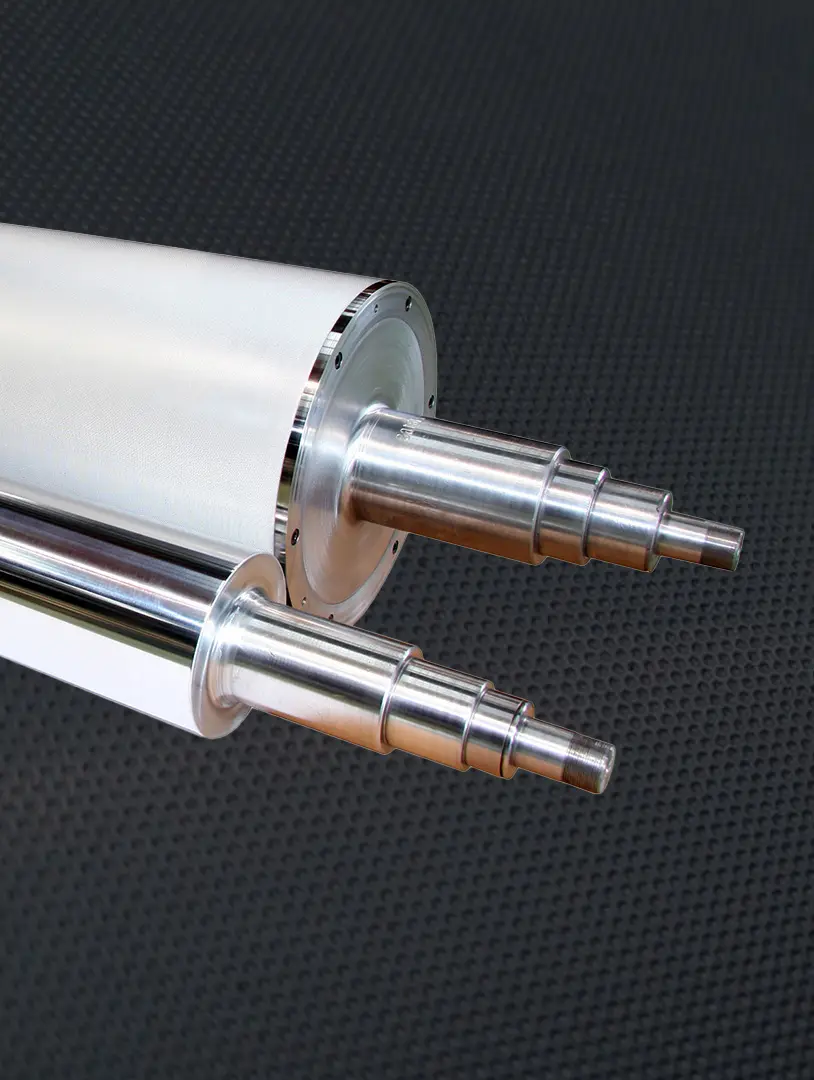
A corrugating roll plays a decisive role in flute forming quality, board strength, and production efficiency. Choosing the right roll can help reduce paper waste, improve flute consistency, and maintain stable board quality during long production runs.
However, different corrugators, flute profiles, and paper grades require different roll specifications.
This guide explains the key factors to consider when choosing a corrugating roll for high-speed production.
Why Choosing the Right Corrugating Roll Matters
During high-speed corrugating, even small dimensional or thermal errors can affect board quality.
An unsuitable corrugating roll may cause:
- Inconsistent flute height
- Flute crushing or paper tearing
- Reduced board compression strength
- Longer setup and adjustment time
- Increased downtime and paper waste
For packaging manufacturers running high-speed single facers or complete corrugator lines, selecting a high-quality roll is essential for maintaining efficient production.
1. Check Compatibility with Your Corrugator
The first step when selecting a corrugating roll is confirming compatibility with your corrugating equipment.
Different corrugators have different roll requirements, including:
- Roll diameter
- Face width (deckle width)
- Flute type and pitch (A, B, C, E, F)
- Heating system and steam connection
- Bearing and journal specifications
- Machine mounting system
A professional corrugating roll supplier should be able to customize the product according to your machine information.
Corrugating rolls are commonly used on:
- Single facer machines
- Double facer production lines
- Mini corrugator lines
- Heavy-duty corrugator lines
- Paper packaging production lines
2. Pay Attention to Roll Dimensional Accuracy
For high-speed production, precision is one of the most important factors.
A high-quality corrugating roll should have:
Stable Flute Profile
The correct flute height and pitch ensure proper paper forming and stable board thickness.
Excellent Roundness
Good roundness helps reduce vibration during high-speed rotation and keeps the nip pressure uniform.
Accurate Concentricity
High concentricity improves flute uniformity, board strength, and production consistency.
Precise Surface Finish
A smooth, wear-resistant surface helps paper release and extends roll service life.
Poor roll accuracy can lead to repeated adjustments and unnecessary downtime.
3. Consider Roll Weight and Handling Efficiency
In daily corrugated production, operators frequently change rolls for different flute profiles or maintenance.
The weight and structure of the roll directly affect operation efficiency.
A suitable lightweight corrugating roll can provide:
- Easier installation
- Faster roll changeover
- Reduced operator workload
- Improved production efficiency
For companies handling multiple flute types, reducing changeover time can create significant productivity improvements.
4. Choose the Right Roll Structure for Your Application
Different production applications may require different corrugating roll solutions.
When selecting a corrugating roll, consider:
Corrugator Speed
High-speed production requires stable structure, high dimensional accuracy, and reliable heating performance.
Flute Profile
Large flutes (A, C) provide strength for heavy packaging; fine flutes (E, F) suit retail and light packaging. The roll must match the flute profile and pitch required by your products.
Paper Grade
Different substrates (kraft liner, test liner, lightweight mediums) require suitable roll surface and hardness.
Production Environment
Continuous operation time, job change frequency, and machine working conditions should also be considered before choosing the right roll.
5. Supplier Experience and Customization Ability
A reliable corrugating roll manufacturer should provide more than standard products.
Professional suppliers should be able to support:
- Custom dimensions
- Machine compatibility confirmation
- Technical recommendations (material, hardness, coating)
- Quality inspection
- International delivery
RMM specializes in customized corrugating rolls for the corrugated packaging industry. Our engineering team works with customers to confirm the correct roll specifications before production.
RMM Corrugating Roll Solutions
We provide customized corrugating rolls for single facer machines and complete corrugator lines.
Our solutions focus on:
- High precision machining
- Stable dimensional accuracy
- Customized production according to machine requirements
- Reliable performance for high-speed production
- Global shipping support
Our corrugating rolls are suitable for customers looking for stable and efficient solutions for corrugated board production.
How to Order a Custom Corrugating Roll?
To recommend the right corrugating roll, customers can provide:
- Corrugator brand and model
- Existing roll dimensions
- Technical drawings
- Photos of current rolls
- Required quantity
Our technical team will evaluate your requirements and provide a suitable solution.
Conclusion
Choosing the right corrugating roll for high-speed production requires careful consideration of machine compatibility, dimensional accuracy, roll structure, and supplier experience.
A reliable roll can help improve flute forming stability, reduce downtime, and support long-term production efficiency.
If you are looking for a customized corrugating roll supplier, contact [Your Company Name] for professional support and solutions.