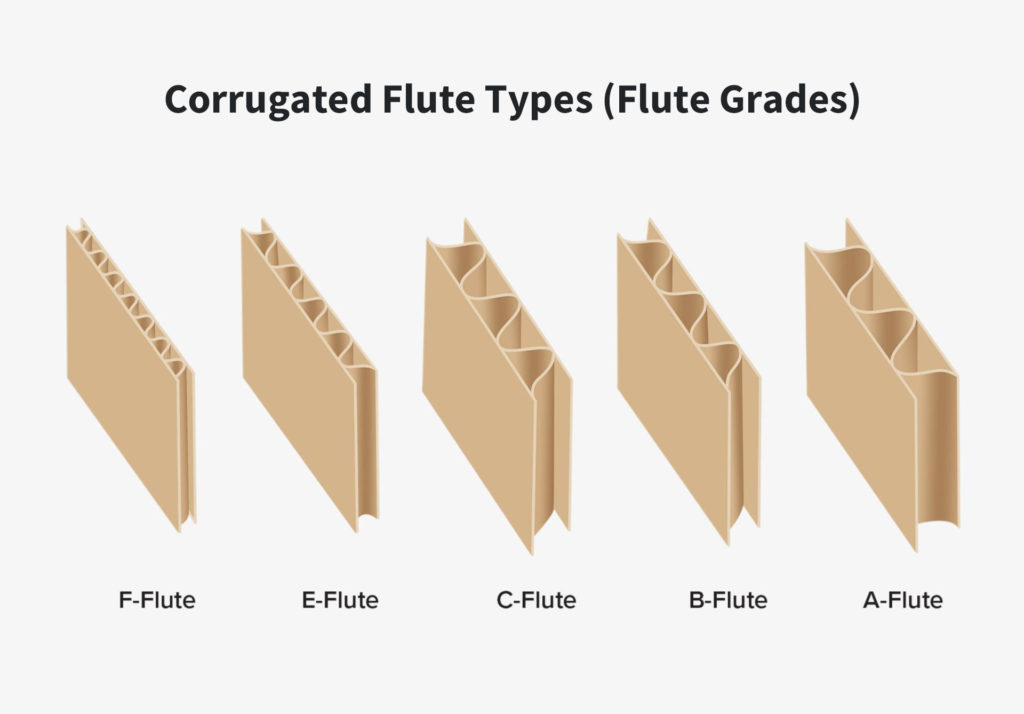
The flute profile is one of the key factors that determines how corrugated board performs. Different profiles, such as A, B, C, E, and F flute, use different flute heights, pitches, and flute frequencies to create different combinations of board thickness, strength, cushioning, material efficiency, and printability. Choosing the right flute profile therefore requires balancing the requirements of the product, transportation conditions, and packaging design.
 |
 |
|---|
Flute Profile and Board Thickness
Flute height has a direct influence on the overall caliper of corrugated board. Taller flutes create a thicker structure with more space between the liners, while smaller flutes produce thinner and more compact board.
As a general reference, A flute is around 4.8 mm high, C flute around 3.6 mm, B flute around 2.4 mm, while E flute is around 1.2 mm. F, G, and N flutes can be below 1 mm. Exact dimensions vary according to the flute design and production specification.
This difference in flute height affects not only board thickness, but also stiffness, cushioning, and how the finished box behaves during handling and transportation.
Flute Profile and Board Strength
Different flute geometries distribute loads in different ways.
Taller profiles such as A and C flute generally provide greater cushioning and support for stacking applications. The larger flute structure provides more space to absorb impact and contributes to vertical compression performance.
Smaller profiles such as B and E flute contain more flutes within the same length. Their tighter geometry provides better resistance to localized crushing and creates a flatter surface.
For applications requiring a combination of properties, double-wall constructions such as BC can combine the characteristics of two different flute profiles.
The key point is that there is no single flute profile that is ideal for every application. The right choice depends on the required balance between cushioning, compression strength, board thickness, and material efficiency.
Flute Profile and Material Efficiency
Flute geometry also affects the amount of corrugated medium required to produce a given area of board.
The take-up factor describes how much fluting material is required compared with the finished board area. Typical take-up factors are higher for larger flutes and lower for smaller flute profiles.
For example, A flute generally requires more medium than B, E, or F flute. This means flute selection can influence material consumption and therefore production cost.
However, a lower take-up factor should not automatically be considered better. The profile still needs to provide the required strength and protection for the final packaging application.
Flute Profile and Printability
Print quality is another important difference between flute profiles.
Larger flutes have greater spacing between flute peaks, which can make the liner surface less uniform and increase the risk of visible flute patterns during printing. Smaller profiles such as E and F flute provide a denser, flatter surface that is generally better suited to detailed graphics and retail packaging.
This makes micro-flute profiles particularly useful where packaging appearance and print detail are important.
Why Corrugating Roll Precision Matters
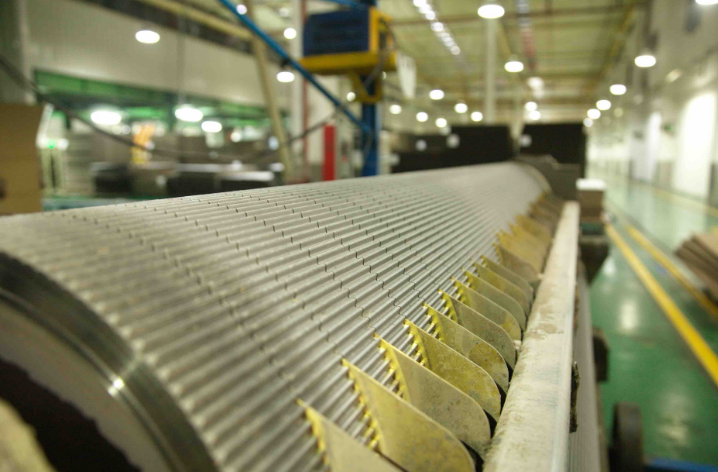
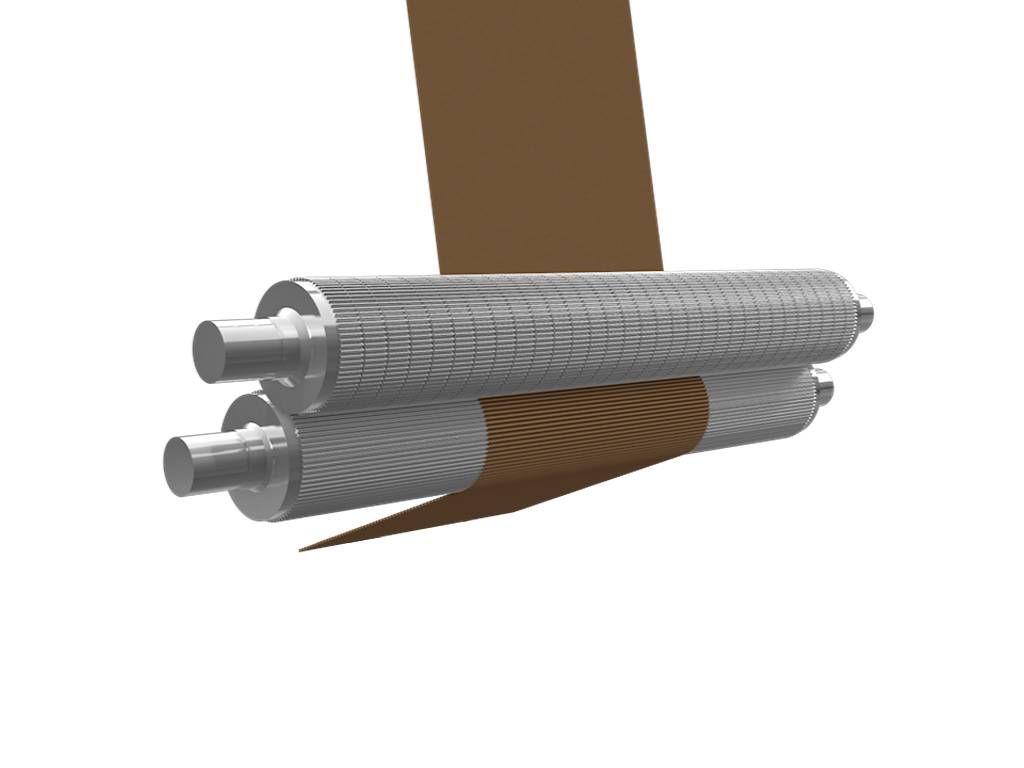
The selected flute profile can only deliver its intended performance when the corrugating rolls accurately reproduce the designed geometry.
Flute height, pitch, profile accuracy, roll gap, parallelism, and surface condition all influence flute formation. This becomes especially important with smaller profiles, where tighter flute spacing and smaller geometric dimensions leave less room for variation.
For corrugating roll manufacturers, maintaining the designed flute geometry throughout machining, coating, grinding, inspection, and service life is therefore essential.
At RMM, flute profile design and manufacturing are supported by precision machining and inspection processes to help maintain consistent flute formation and reliable corrugator performance.
Choosing the Right Flute Profile
Flute selection should start with the application rather than the flute name alone.
- A/C flute: cushioning, stacking strength, and heavier-duty applications
- B/C flute: balanced performance for general packaging
- E/F flute: thinner board, smooth surfaces, and detailed printing
- Double-wall combinations: higher structural requirements through complementary flute profiles
The right flute profile is ultimately a balance between board performance, material efficiency, production requirements, and end-use demands.
Conclusion
Flute profile is much more than a specification on a corrugated board datasheet. Its geometry influences board thickness, strength, cushioning, material consumption, and printability.
For corrugating roll manufacturers, the challenge is to reproduce and maintain that geometry accurately. When the flute profile is properly designed and precisely manufactured, it provides a stronger foundation for consistent corrugated board production.