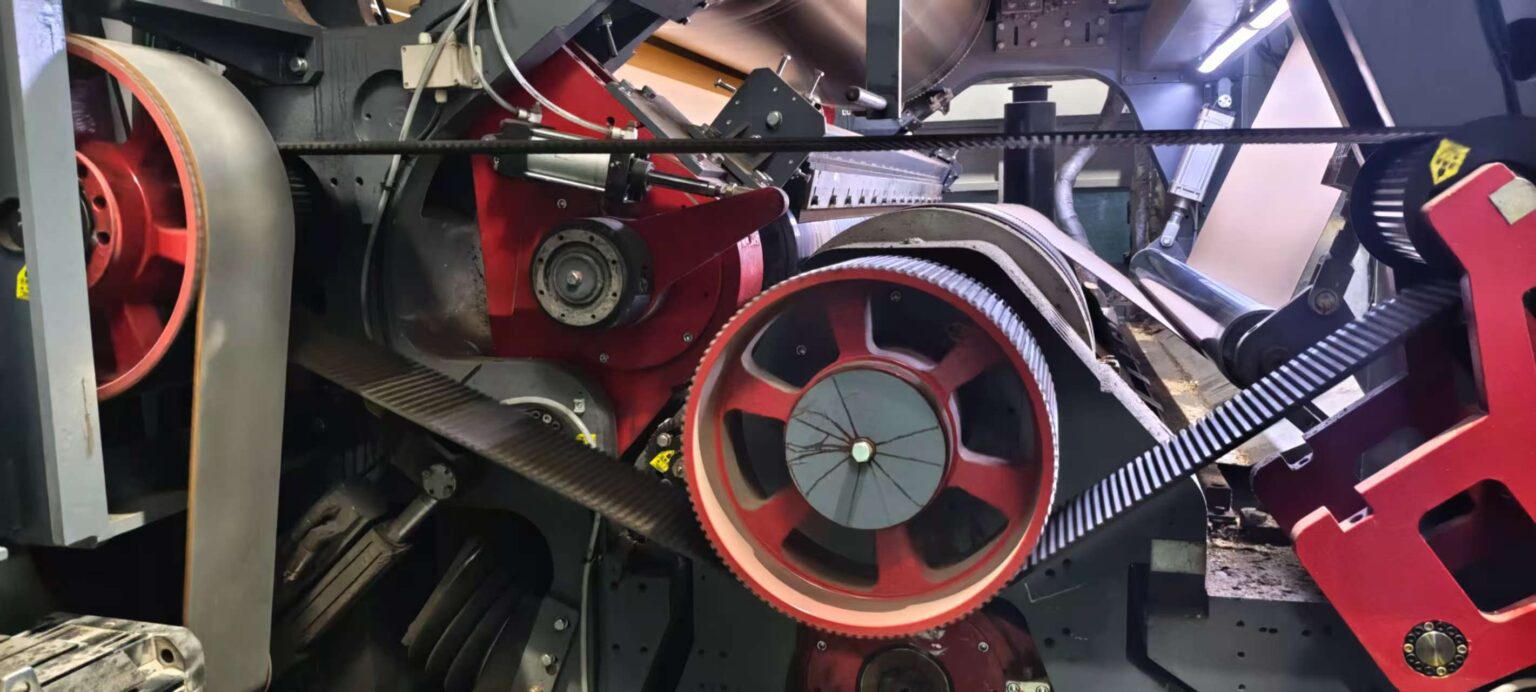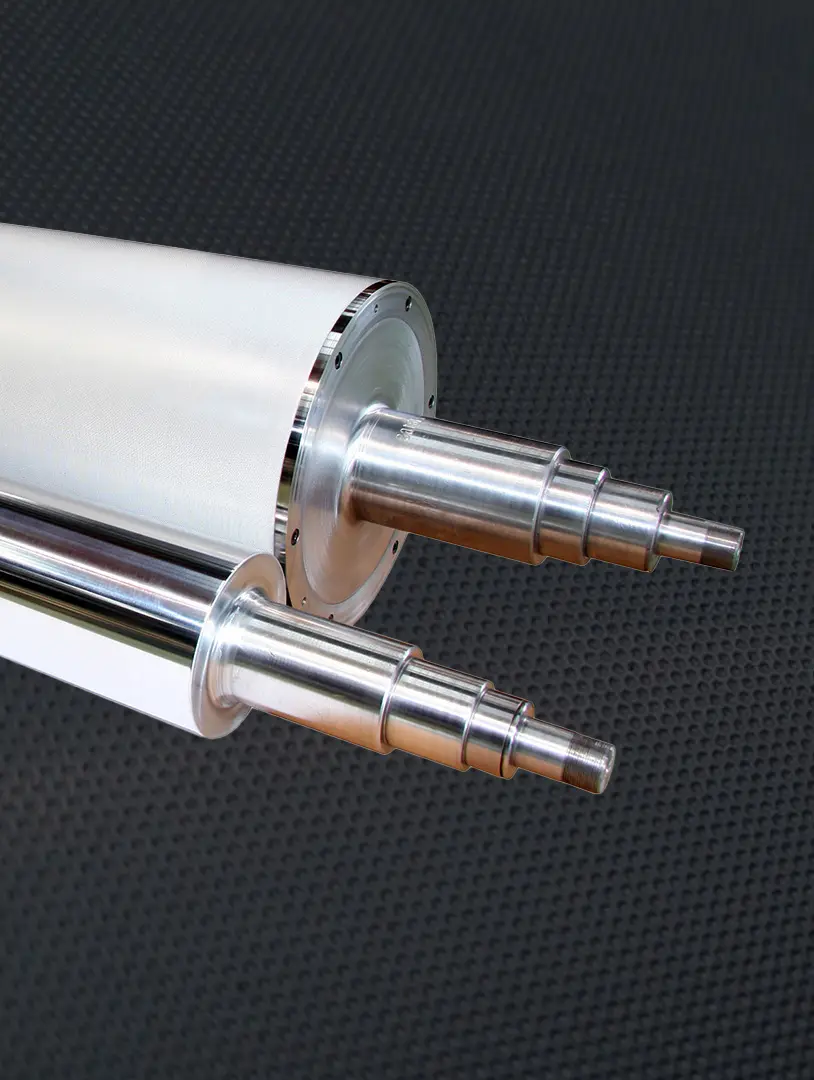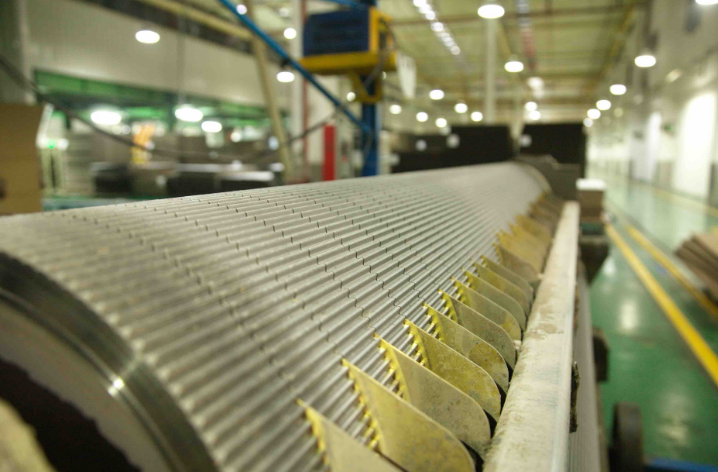
Glue rolls are essential components of the gluing system in a corrugator. Glue rolls and doctor rolls work together to control adhesive application on the flute tips. When glue roll condition, roll gap, or alignment is incorrect, common board defects such as poor bonding, delamination, bubbles, uneven glue application, and board warping can occur.
Understanding the common glue roll problems and their causes can help operators identify issues earlier and maintain stable corrugated board quality.
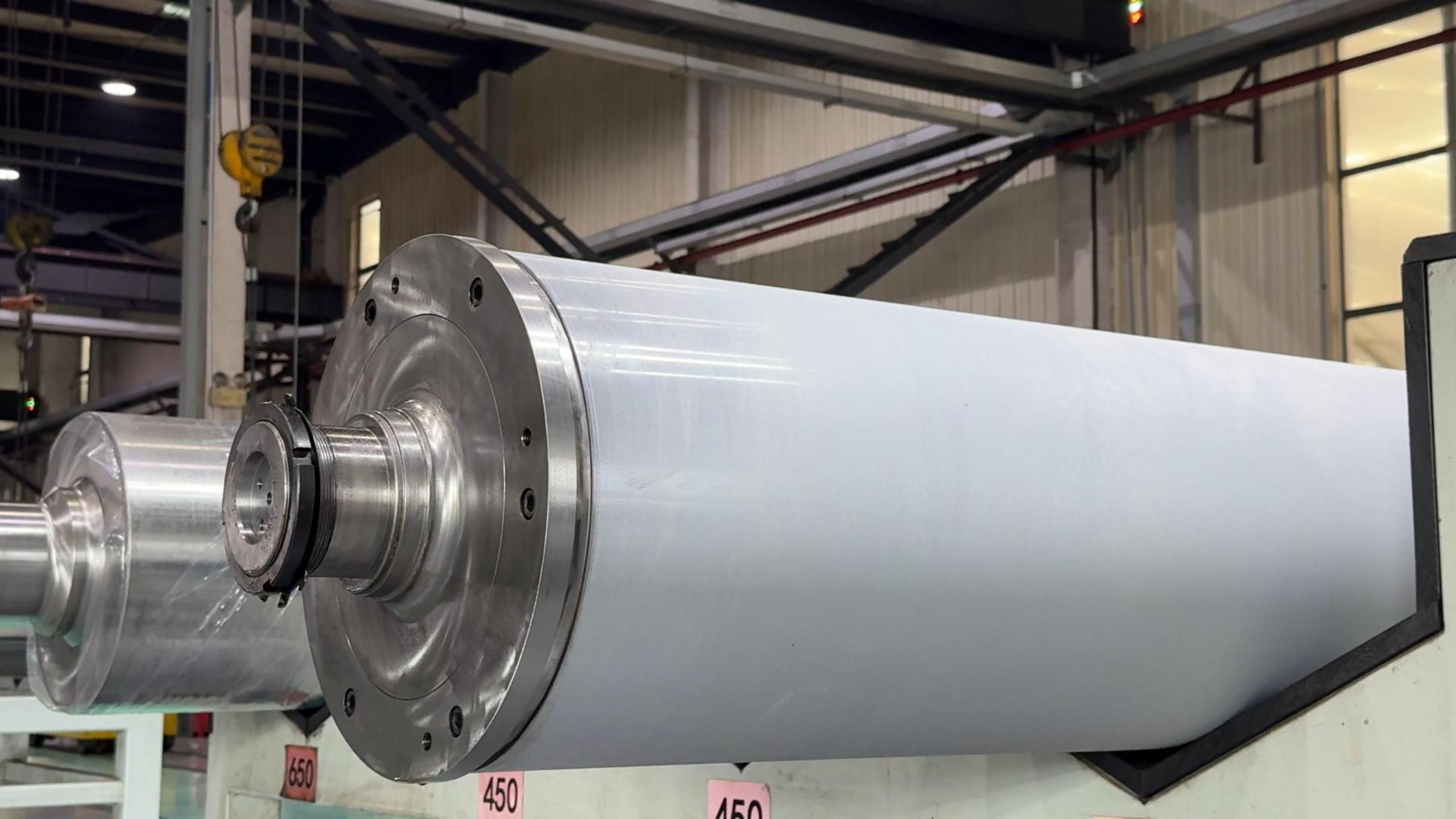
1. Uneven Glue Application
Uneven glue application can result in local poor bonding, delamination, or bubbles. One side of the board may receive more adhesive while the other receives less.
Common Causes
- Incorrect gap between the Gule roll and doctor roll
- Uneven or non-parallel roll gap across the working width
- Worn or damaged roll surface
- Paper dust, dried adhesive, or other contaminants between the rolls
Possible Solutions
- Re-adjust the roll gap and ensure both sides are consistent
- Check and correct roll parallelism
- Clean adhesive buildup and foreign particles from the roll surface
- Replace severely worn glue rolls
For some corrugators, the Gule roll-to-doctor roll gap may be set within a small range such as 0.20–0.25 mm, but the correct setting depends on the machine design, adhesive system, and production conditions.
2. Excessive Glue Application
Too much adhesive can contribute to the "washboarding" or "corrugation" effect on the liner surface, where excessive moisture and adhesive affect the flatness of the board.
Common Causes
- Excessive roll gap
- Incorrect positioning between the glue roll and lower corrugating roll
- Excessive adhesive transfer
Possible Solutions
- Adjust the glue roll gap according to the machine and adhesive requirements
- Check the distance and relationship between the glue roll and lower corrugating roll
- Optimize adhesive formulation and viscosity with the adhesive supplier or process engineer
The objective is not simply to apply more adhesive, but to achieve sufficient and uniform coverage with controlled glue transfer.
3. Insufficient Glue Application
Insufficient adhesive can cause local weak bonding, delamination, or separation between the liner and corrugated medium.
Common Causes
- Glue roll gap is too small
- Low adhesive level in the glue pan
- Insufficient adhesive circulation
- Problems with the glue pump or valve
Possible Solutions
- Check and adjust the roll gap
- Maintain an appropriate adhesive level
- Inspect the glue pump, valves, and circulation system
- Check adhesive viscosity and flow conditions
Stable adhesive supply is essential for maintaining consistent glue transfer across the working width.
4. Poor Glue Transfer on the Roll Surface
A glue roll may fail to carry and transfer adhesive evenly when its surface condition deteriorates. This can lead to local poor bonding and bubbles.
Common Causes
- Roll surface wear
- Dried adhesive or contaminants on the roll
- Surface damage or buildup
- Incorrect adhesive viscosity
- Deteriorated adhesive
Possible Solutions
- Clean the roll surface regularly
- Remove dried adhesive and deposits
- Inspect the roll surface for wear or damage
- Replace severely worn rolls
- Check adhesive viscosity and replace deteriorated adhesive when necessary
A clean and stable roll surface is important for consistent adhesive transfer.
5. Glue Roll Parallelism Deviation
When the Glue Roll and Doctor Roll are not properly aligned or parallel, adhesive distribution may become uneven across the board width. One side may receive more adhesive than the other, potentially contributing to uneven bonding, board thickness variation, or board warping.
Possible Solutions
- Check the parallelism of the relevant rolls
- Correct alignment according to the machine manufacturer's specifications
- Check roll bearings, supports, and adjustment mechanisms
- Verify that the roll position remains stable during operation
Roll parallelism should be checked as part of routine machine maintenance, especially when uneven glue application repeatedly occurs on one side.
6. Unstable Glue Roll Gap
A glue roll gap that changes during production can cause adhesive transfer to fluctuate. This may result in intermittent poor bonding, bubbles, or inconsistent glue coverage.
Common Causes
- Wear of adjustment components
- Loose fasteners
- Mechanical play in the adjustment mechanism
- Long-term operation without calibration
Possible Solutions
- Recalibrate the glue roll gap
- Check adjustment mechanisms and fasteners
- Inspect worn components and replace them when necessary
- Verify that the gap remains stable during production
Why Glue Roll Condition Matters
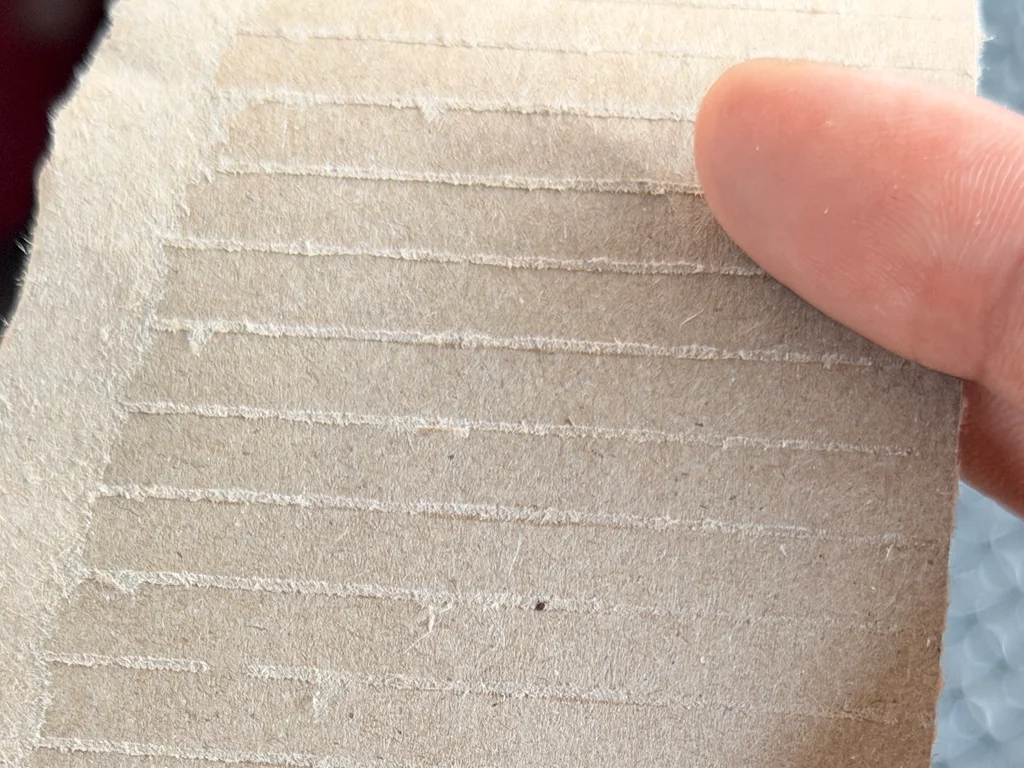
Glue application is not controlled by adhesive viscosity alone. Roll surface condition, roll gap, parallelism, adhesive supply, and machine adjustment all work together to determine how consistently adhesive reaches the flute tips.
A small mechanical deviation can therefore become a visible board-quality problem. Regular inspection of glue rolls and their adjustment systems can help reduce unexpected bonding defects and maintain stable production.
For corrugating plants, routine maintenance should include checking roll surface condition, gap consistency, parallelism, adhesive circulation, and wear. When a glue roll has reached a condition that cannot be restored through normal cleaning or adjustment, professional refurbishment or replacement should be considered.