A single facer is one of the most important sections of a corrugator. Its performance depends on several systems working together, but three are particularly important: the glue application system, steam system, and control system. Glue transfer determines bonding quality, steam provides the heat required for flute forming and adhesive gelatinization, while the control system coordinates parameters such as glue volume, roll speed, roll gap, and temperature. Understanding how these three systems work together can help operators maintain stable production and corrugated board quality.
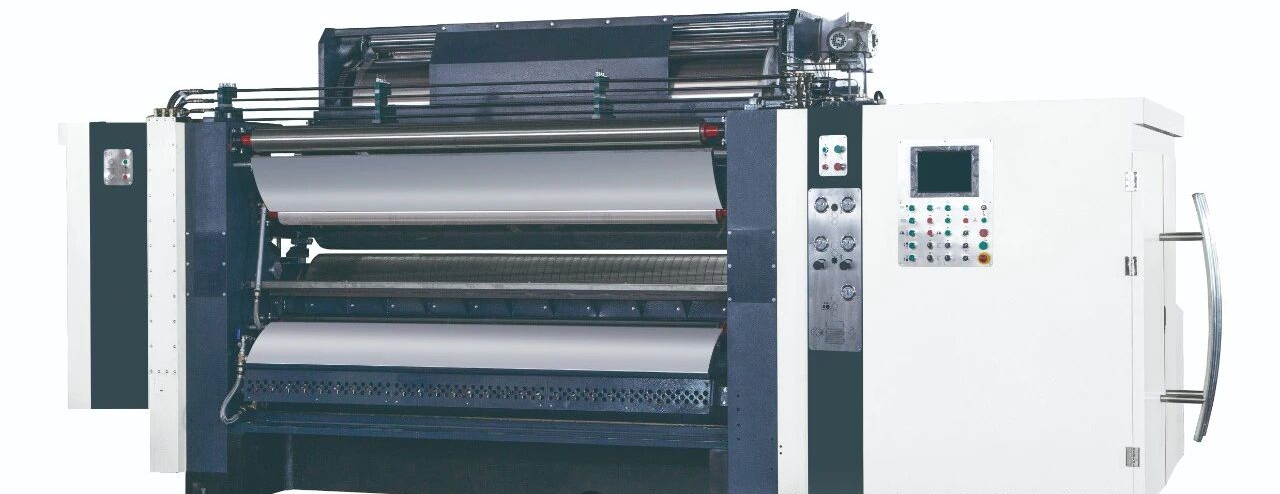
1. Glue Application System
The glue application system controls the amount of adhesive transferred to the flute tips. The gap between the glue roll and doctor/metering roll is one of the main parameters used to control glue film thickness.
Another important factor is the engraving line count of the glue roll.
For many glue rolls, the line count is typically in the range of 28–40 lines, depending on the machine and adhesive system. The line count affects the roll's adhesive carrying capacity and transfer characteristics.
In general, a higher line count produces a thinner and more controlled adhesive film. However, this also places greater demands on adhesive properties, particularly viscosity and stability.
For high-speed corrugating production, the relationship between:
- Glue roll line count
- Adhesive viscosity
- Glue roll gap
- Production speed
- Required glue application
needs to be properly matched.
A glue roll with an unsuitable engraving specification may make it more difficult to maintain stable adhesive transfer at higher production speeds.
Why Glue Roll Surface Matters
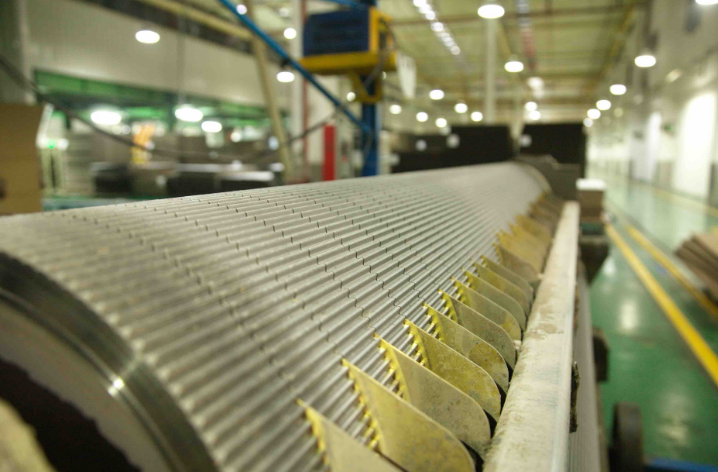
The engraving pattern on the glue roll creates controlled cells or grooves for carrying adhesive. A properly selected roll helps distribute glue more evenly across the working width and supports consistent transfer to the flute tips.
This is why glue roll selection should consider not only the desired glue volume, but also the adhesive formulation, board grade, flute profile, and production speed.
2. Steam System
The steam system provides heat to the corrugating rolls and plays a critical role in flute forming and adhesive bonding.
There are two main reasons why corrugating rolls need to be heated:
Flute Forming
The paper needs to reach an appropriate temperature and moisture condition for effective flute forming. Stable roll temperature helps the corrugating medium pass through the flute nip consistently.
Adhesive Gelatinization
Corrugating adhesive needs to reach its required gelatinization temperature to develop initial bonding strength. Therefore, the temperature of the corrugating rolls directly affects the bonding process.
Steam Pressure Is Not the Whole Story
Steam pressure is an important factor in determining the heating condition of a corrugating roll, but it is not the only one.
The siphon system is equally important.
When steam enters a corrugating roll, it transfers heat to the roll and produces condensate. If condensate is not removed effectively, it can accumulate inside the roll and absorb a significant amount of heat.
This can lead to:
- Lower roll surface temperature
- Uneven temperature distribution
- Unstable flute forming
- Reduced production speed
- Inconsistent bonding conditions
The siphon tube helps remove condensate from inside the corrugating roll.
For this reason, the siphon system should be checked regularly. Operators should verify that the siphon is correctly positioned and that condensate can be discharged effectively.
A steam system may appear to be working normally from the outside, while poor condensate removal can still affect the actual thermal condition of the corrugating roll.
3. Control System
Modern single facers involve many interacting parameters, making automated control increasingly important.
A production control system can coordinate glue application, roll adjustment, speed, and temperature according to different flute types, paper grades, and production conditions.
Glue Application Control
Different flute types can have different glue application settings. A control system can store glue-volume curves and adjustment offsets for different paper materials.
Based on factors such as:
- Flute type
- Flute height
- Paper grade
- Production speed
- Adhesive requirements
the system can automatically adjust the relevant machine parameters.
For example, the control system may drive the glue-roll adjustment mechanism to change the roll gap according to the selected production recipe.
Glue Roll Speed Control
Another approach is to control the rotational speed of the glue roll.
By coordinating glue-roll speed with board running speed, the system can help maintain consistent adhesive transfer to the flute tips.
This type of control becomes particularly useful at higher production speeds, where stable synchronization between machine speed and glue transfer becomes more important.
Temperature Control
Temperature control is one of the most critical functions of a modern single facer.
Newer single facer designs may integrate preheating cylinders into the machine. By controlling the wrap angle of the paper around the preheater, the system can regulate the paper's heating condition while optimizing steam consumption.
Instead of relying only on steam pressure, the machine can coordinate paper temperature, wrap angle, production speed, and other process parameters.
How the Three Systems Work Together
The glue, steam, and control systems should not be considered separately.
Steam provides the thermal conditions → the corrugating rolls form the flute → the glue system applies adhesive to the flute tips → the control system coordinates the operating parameters.
If one system is unstable, the other systems may also be affected.
For example, insufficient heat can affect flute forming and adhesive gelatinization. An unstable glue system can lead to poor bonding even when the flute profile is correct. Poor control of speed, gap, or temperature can make both conditions more difficult to maintain.
For corrugated board manufacturers, stable single facer performance therefore depends on maintaining the glue application system, steam and condensate system, and control system as an integrated process.