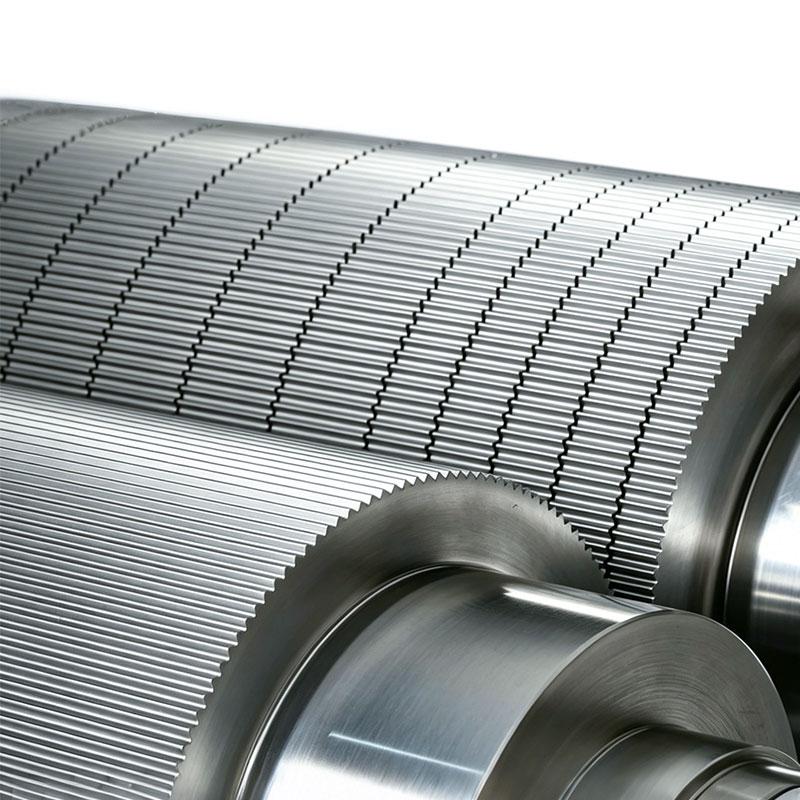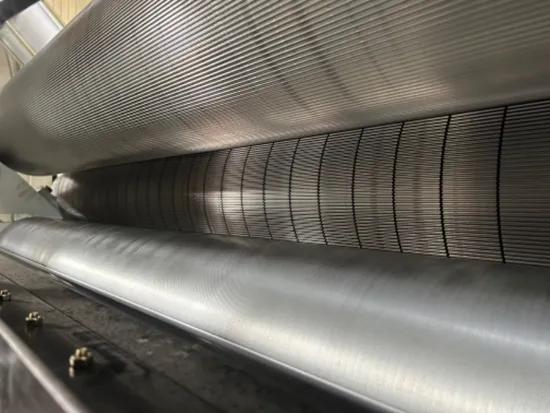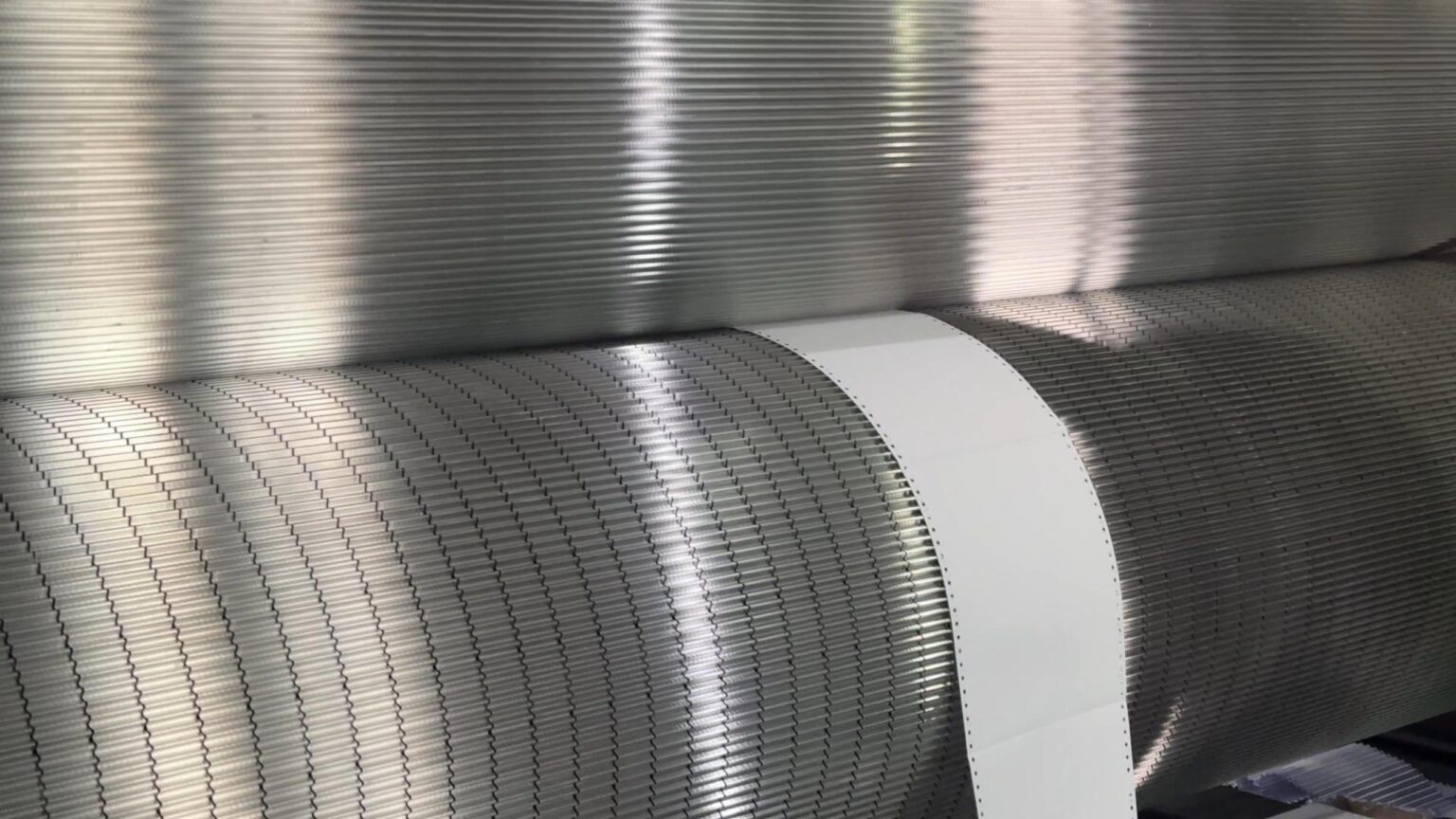
Corrugating rolls are at the heart of corrugated board production. Their condition and performance directly influence flute forming, board strength, production stability, and finished-product quality. At the same time, corrugating rolls affect several major production costs, including paper consumption, adhesive usage, energy consumption, maintenance, and roll replacement.
The relationship between corrugating rolls, board quality, and production cost can be understood through five key areas.
1. Corrugating Roll Design: Balancing Quality and Material Consumption
Flute Parameters
Flute height, flute count, and pitch all affect board performance and paper consumption.
Higher flutes can provide greater board thickness and compression strength, but they generally require more paper. Finer flute profiles can improve surface flatness and printing performance, while different flute geometries involve different material requirements.
Choosing the appropriate flute profile allows manufacturers to meet required board strength while controlling paper consumption.
Roll Diameter and Wall Thickness
Roll diameter and construction affect rigidity, operating stability, and load distribution. Larger rolls generally provide greater rigidity and can support stable operation, but they also affect the contact conditions and tension of the corrugating medium.
These parameters need to be matched with the machine design, production speed, paper grade, and operating conditions. An unsuitable combination can result in unstable flute forming and unnecessary equipment wear.
Crown and Roll Gap
The crown of a corrugating roll is designed to compensate for roll deflection and help maintain more consistent pressure across the working width.
Roll gap is equally important. An excessively small gap can damage the corrugated medium or crush the flute, while an excessive gap can reduce forming stability and affect flute height.
Proper control of crown, roll gap, and pressure helps maintain consistent flute formation and reduce production waste.
2. Roll Material and Surface Technology: An Investment in Service Life
Material and Surface Treatment
The roll substrate and surface treatment have a direct influence on hardness, wear resistance, and service life.
Processes such as heat treatment and tungsten carbide coating can significantly improve surface durability. Tungsten carbide corrugating rolls generally provide higher wear resistance and better flute-profile retention than conventional roll surfaces.
Although a high-performance roll may require a higher initial investment, maintaining flute geometry for longer can reduce quality losses, regrinding frequency, and replacement costs over the service life of the roll.
Surface Finish and Flute Accuracy
Surface roughness and flute geometry also affect board quality.
Surface damage, uneven finishing, damaged flute tips, or deviations in flute geometry can contribute to unstable flute forming, liner marking, and inconsistent board quality. Maintaining accurate flute profiles and a suitable surface finish is therefore important for both production performance and roll longevity.
3. Roll Wear: A Direct Link Between Quality and Cost
Corrugating roll wear is gradual, but its impact can become significant over time.
Flute Height Reduction and Surface Wear
As the flute profile wears, flute height may gradually decrease. This can affect board thickness, compression performance, and flute formation.
Wear can also contribute to uneven adhesive application. For example, changes in the roll geometry may cause uneven contact conditions across the working width, increasing the risk of poor bonding, bubbles, or other board defects.
These quality problems can directly increase scrap and rework costs.
Geometric Accuracy
Parallelism, roundness, and runout are important indicators of roll condition.
Long-term wear or inaccurate refurbishment can reduce geometric accuracy, resulting in uneven flute formation, board thickness variation, vibration, and abnormal equipment wear.
Regular dimensional inspection helps identify these changes before they become major production problems.
4. Operating Conditions and Supporting Systems
The performance of a corrugating roll also depends on how it operates within the complete corrugating system.
Pressure and Roll Gap
Incorrect pressure or roll-gap settings can lead to crushed flutes, unstable flute height, or inconsistent forming.
Excessive pressure can increase mechanical load and accelerate roll wear, while insufficient pressure may result in poor flute formation. Proper adjustment should therefore be based on the machine manufacturer's specifications and the actual production conditions.
Bearings, Lubrication, and Related Components
Supporting components also have a direct influence on roll performance.
Bearing clearance, locking components, lubrication, and other machine-side systems affect roll stability. Bearing wear or insufficient lubrication can increase vibration and operating temperature, accelerating roll wear and potentially contributing to board-quality problems.
A high-quality corrugating roll cannot perform properly if the supporting system is not maintained.
5. Matching Raw Paper and Production Conditions
Raw Paper Quality
The condition of the incoming paper also affects corrugating roll wear.
Paper containing excessive hard particles or contaminants can increase surface abrasion. Excessive paper tension can also increase friction and mechanical load on the roll.
Selecting suitable paper and maintaining stable paper tension can therefore help protect the roll surface.
Production Conditions
Long-term high-speed, high-load production naturally places greater demands on corrugating rolls. Frequent machine starts and stops, abnormal operating conditions, and unstable process parameters can also increase mechanical stress and wear.
Matching the roll specification with the paper grade, flute profile, production speed, and machine configuration is essential for maintaining stable operation.
Building a Better Balance Between Quality and Cost
Corrugating roll cost should not be evaluated only by the initial purchase price. A more complete evaluation should consider paper consumption, roll service life, board quality, downtime, maintenance, regrinding, and scrap.
A practical approach includes:
- Selecting flute parameters according to board performance requirements
- Using wear-resistant roll materials and suitable surface treatments
- Regularly checking flute height, profile, runout, and parallelism
- Monitoring roll gap, pressure, bearings, and lubrication
- Matching roll specifications with paper and production conditions
- Regrinding or refurbishing rolls when their condition requires it
In corrugated board production, a well-maintained corrugating roll does more than form flutes. It helps maintain stable board quality while controlling material consumption, downtime, and long-term production costs.