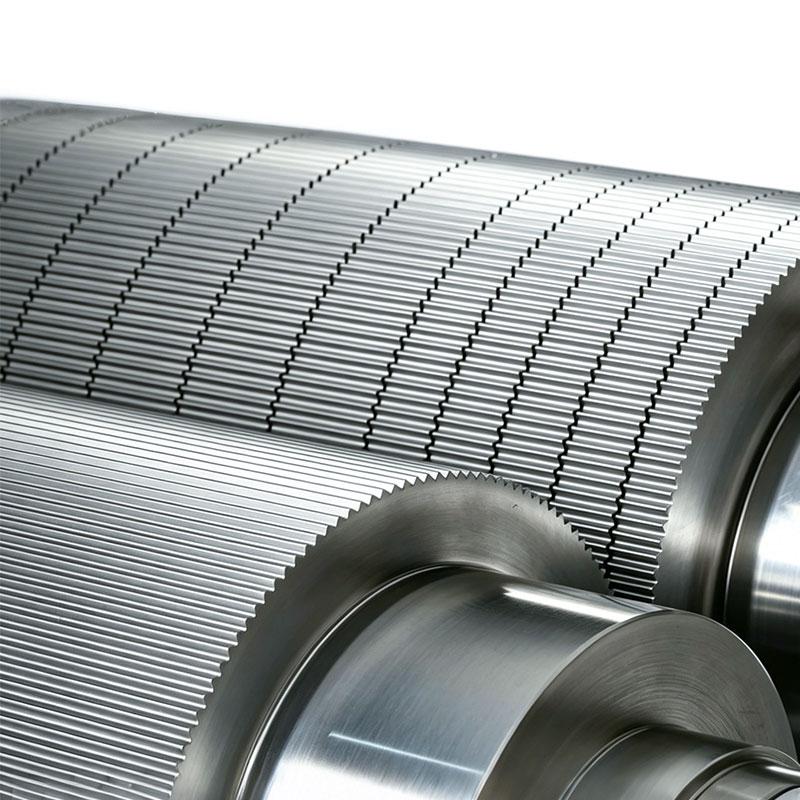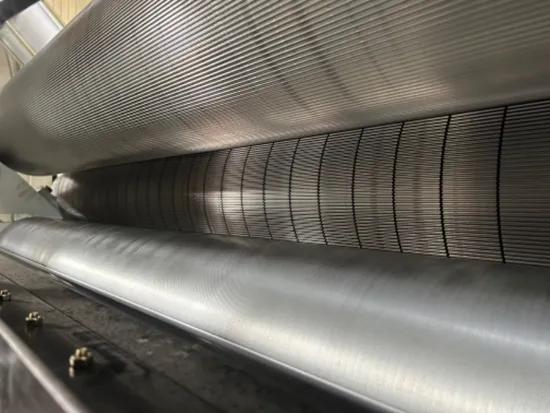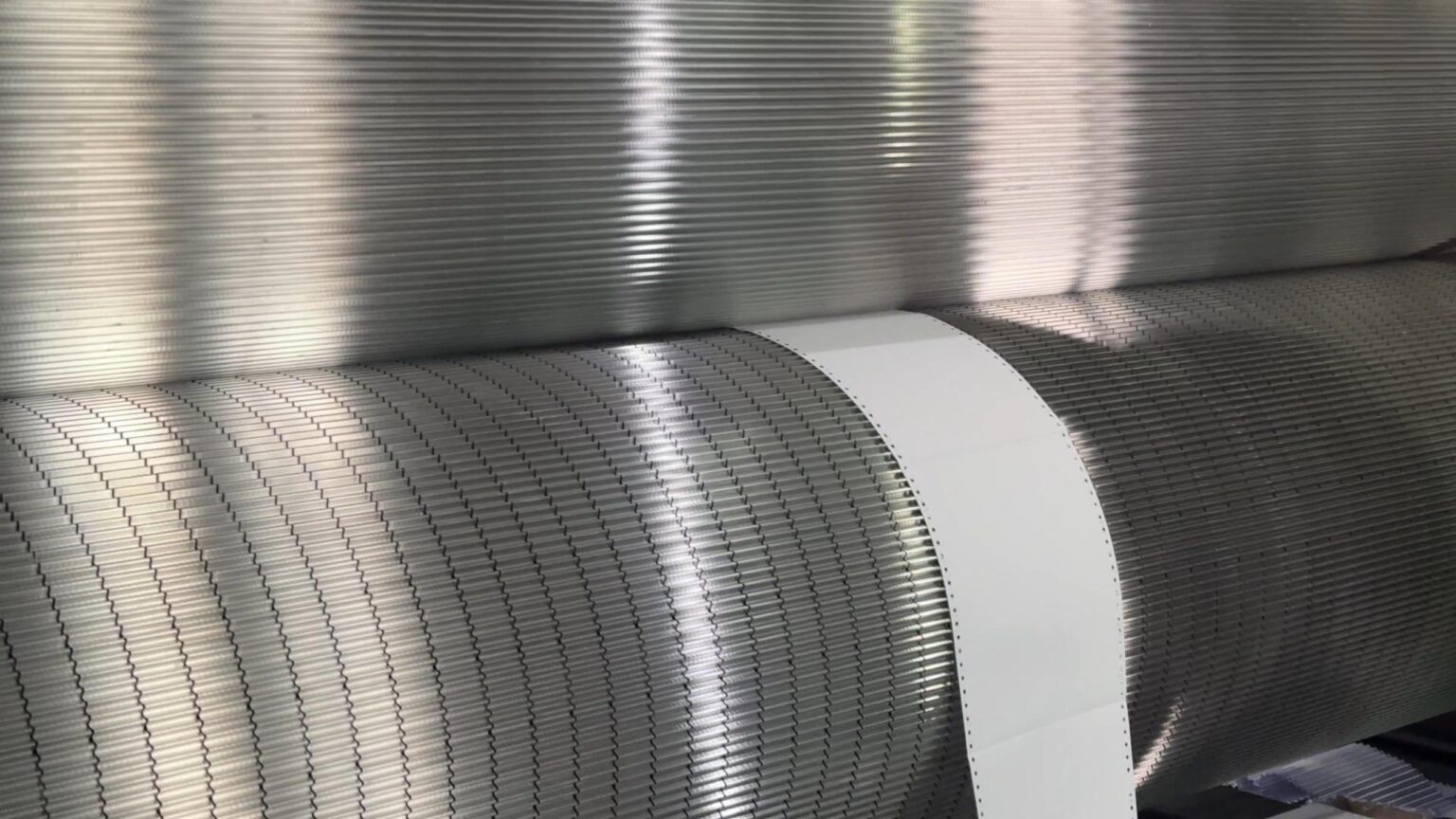
Tungsten carbide corrugating rolls are widely used in corrugated board production because of their excellent wear resistance and surface durability. However, the performance of a tungsten carbide corrugating roll depends on more than the coating material itself.
From powder selection to spraying and final grinding, several manufacturing factors determine coating quality, adhesion, and surface finish.
Here are four key factors that deserve attention.
1. Powder Material: The Foundation of Coating Quality
The composition, particle size, and consistency of tungsten carbide powder directly influence coating performance.
WC-Co powders, such as WC-12Co, combine hard tungsten carbide particles with a cobalt binder. The carbide provides wear resistance, while the metallic binder contributes toughness and coating cohesion.
Particle size distribution also matters. Powder that is too fine may be more susceptible to oxidation, while excessively coarse particles may not achieve optimal heating and deposition during spraying.
Consistent powder quality helps establish a stable coating structure.
2. HVOF Spraying: Controlling Coating Density and Adhesion
High-Velocity Oxygen Fuel (HVOF) spraying is an established technology for applying tungsten carbide coatings.
The high-velocity spray stream helps produce dense coatings with low porosity and strong adhesion when the process is properly controlled.
Important process parameters include:
- Oxygen-to-fuel ratio
- Spray distance
- Powder feed rate
- Spray gun angle
- Spraying speed and consistency
Stable parameter control helps reduce coating defects and maintain consistent coating performance across the roll surface.
3. Surface Preparation: Ensuring Reliable Coating Adhesion
Before HVOF spraying, the roll substrate must be properly prepared.
Cleaning removes contaminants, while controlled grit blasting creates a suitable surface profile for mechanical bonding between the coating and substrate.
Uneven preparation, residual contamination, or insufficient surface roughness can compromise coating adhesion and increase the risk of coating defects or delamination.
A clean and consistently prepared substrate is essential for reliable coating quality.
4. Precision Finishing: Maintaining Flute Profile Accuracy
After spraying, precision grinding and polishing are necessary to achieve the required flute geometry and surface finish.
For corrugating rolls, coating thickness and uniformity are particularly important because even small profile deviations can affect flute geometry and paper contact conditions.
The finishing process must balance:
- Flute profile accuracy
- Coating thickness uniformity
- Surface roughness
- Overall dimensional consistency
Proper finishing helps ensure smooth paper movement and consistent corrugating performance.
5. How to Evaluate Tungsten Carbide Coating Quality
Before delivery, several important parameters should be inspected:
| Inspection Item | What It Indicates |
|---|---|
| Bond strength | Coating adhesion to the substrate |
| Porosity | Compactness of the coating structure |
| Hardness | Resistance to surface deformation and wear |
| Coating thickness | Consistency of the applied coating |
| Surface roughness | Quality of the finished roll surface |
These inspection results provide a more complete understanding of coating quality than hardness measurements alone.
Conclusion
High-quality tungsten carbide corrugating rolls are the result of coordinated control throughout the manufacturing process. Powder selection, HVOF spraying, surface preparation, and precision finishing all contribute to coating performance.