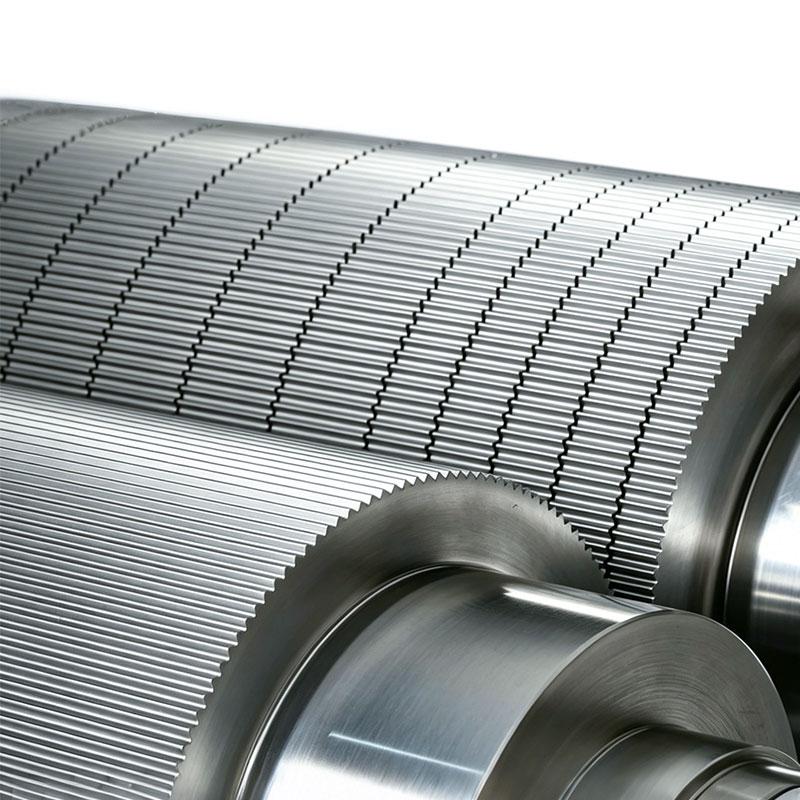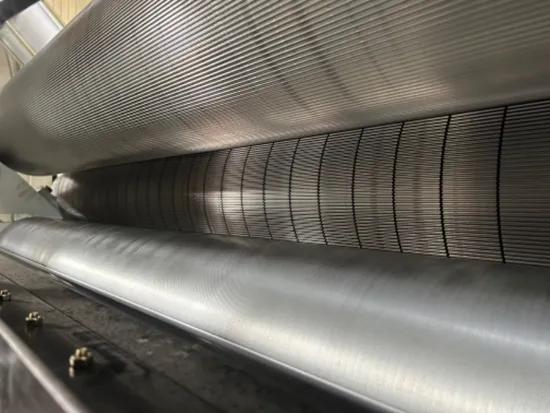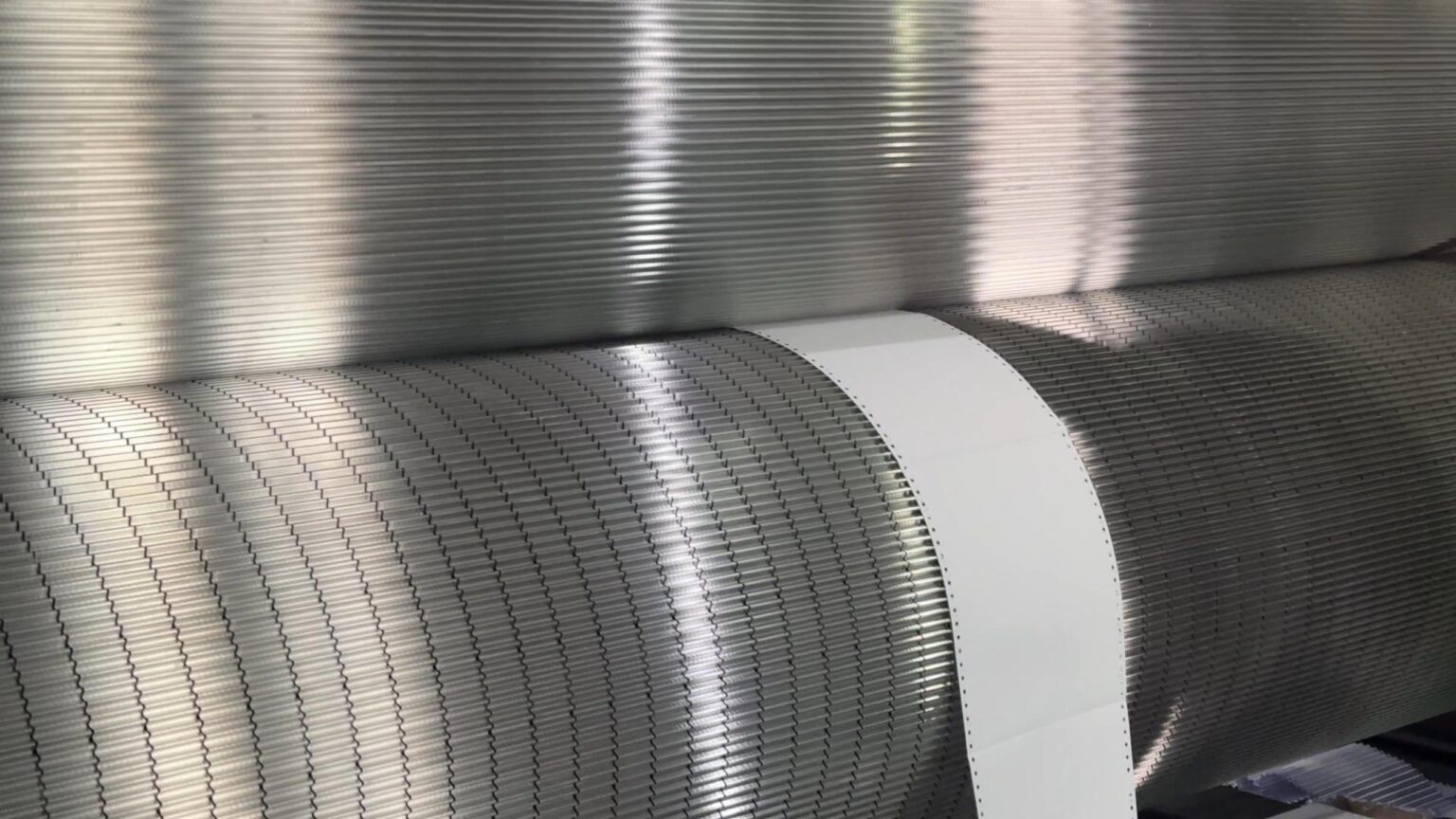
With rising market competition and increasing cost pressures, more corrugated packaging manufacturers are paying attention to how corrugating roll parameters affect production costs.
The paper consumption of corrugated board is directly influenced by the flute geometry of corrugating rolls. For corrugated packaging manufacturers, paper and adhesive costs can account for around 80% of total production costs. Paper consumption and the amount of adhesive used are closely related to corrugating roll parameters.
Standard Requirements for Corrugating Roll Flute Height and Flute Count
The standard requirements for flute height and flute count of different flute types are shown below.
| Flute Type | Flute Height (mm) | Flutes per 300 mm |
|---|---|---|
| B | 2.5–3.0 | 50 ± 2 |
| E | 1.1–2.0 | 96 ± 3 |
| F | 0.6–0.9 | 136 ± 4 |
Comparing Costs When Adjusting Corrugating Roll Parameters
Suppose a company uses B-flute corrugating rolls with a flute height of 2.8 mm, a flute count of 46.57 flutes per 300 mm, and a take-up ratio (TUR) of 1.39.
If the flute height of the B-flute roll is reduced by 0.3 mm to 2.5 mm, and the flute count decreases by two to 44.57 flutes per 300 mm, paper consumption can be reduced, potentially saving considerable costs.
1. Cost Savings by Reducing Flute Count
Flute count refers to the number of flutes within every 300 mm, according to the relevant standard. The higher the flute count, the greater the paper consumption, and vice versa.
A higher flute count generally produces a flatter board surface and stronger compression resistance. The following table shows how changes in flute count affect paper consumption when flute height remains constant.
| Flute Count per 300 mm | 32 | 33 | 34 | 35 | 36 |
|---|---|---|---|---|---|
| Paper Consumption | 1.462 | 1.491 | 1.521 | 1.552 | 1.584 |
As shown in Table 1, each additional flute increases the take-up ratio by approximately 3%. This means that producing 100 meters of board requires around 3 additional meters of corrugated medium. A difference of two flutes results in an increase of approximately 6%.
Therefore, if the flute count of a B-flute roll is reduced by two flutes per 300 mm, while other conditions remain unchanged, the paper consumption of three-ply corrugated board can decrease by approximately 6%.
For example, assuming a corrugated medium weight of 130 g/m², a paper price of RMB 3,050 per tonne, and annual production of 10 million m², the estimated savings would be:
- Paper saved: 78,000 kg per year
- Annual cost savings: RMB 237,900
2. Cost Savings by Reducing Flute Height
Flute height has a significant effect on paper consumption. The following tables show how changes in flute height affect the take-up ratio of A-flute and B-flute profiles when the flute count remains unchanged.
Table 2. Effect of Flute Height on Take-Up Ratio
Flute count: 33.3 flutes per 300 mm
| Flute Height (mm) | 4.9 | 4.8 | 4.7 | 4.6 | 4.5 |
|---|---|---|---|---|---|
| Take-Up Ratio (TUR) | 1.562 | 1.543 | 1.523 | 1.504 | 1.485 |
Table 3. Effect of Flute Height on Paper Consumption
Flute count: 47 flutes per 300 mm
| Flute Height (mm) | 2.9 | 2.8 | 2.7 | 2.6 | 2.5 |
|---|---|---|---|---|---|
| Paper Consumption | 1.427 | 1.401 | 1.374 | 1.349 | 1.324 |
Tables 2 and 3 show that reducing flute height by 0.1 mm can reduce the take-up ratio by approximately 2.5%, equivalent to using around 2.5 fewer meters of corrugated medium for every 100 meters of board produced.
If flute height is reduced by 0.3 mm, the take-up ratio can decrease by approximately 7.5%, equivalent to using around 7.5 fewer meters of corrugated medium for every 100 meters of board produced.
Using the same assumptions of 130 g/m² corrugated medium, a paper price of RMB 3,050 per tonne, and annual production of 10 million m², the estimated savings would be:
- Paper saved: 97,500 kg per year
- Annual cost savings: RMB 297,375
Note: Choose Flute Parameters According to Board Requirements
Flute count must be adjusted appropriately according to the physical performance requirements of the finished board.
For example, if a customer requires a compression strength of 100 kg, but the board produced can withstand 150 kg, the additional strength may represent an unnecessary cost if the customer's requirements are already met. The flute count could potentially be reduced to lower paper consumption.
However, if the customer requires 150 kg of compression strength, a board capable of withstanding only 100 kg will not meet the requirement. Likewise, the difference in paper consumption between producing board with a compression strength of 150 kg and 250 kg can be substantial.
Therefore, when adjusting corrugating roll parameters, manufacturers should first understand the customer's requirements for board strength and other physical properties. The goal is to balance board performance with paper consumption and production costs.