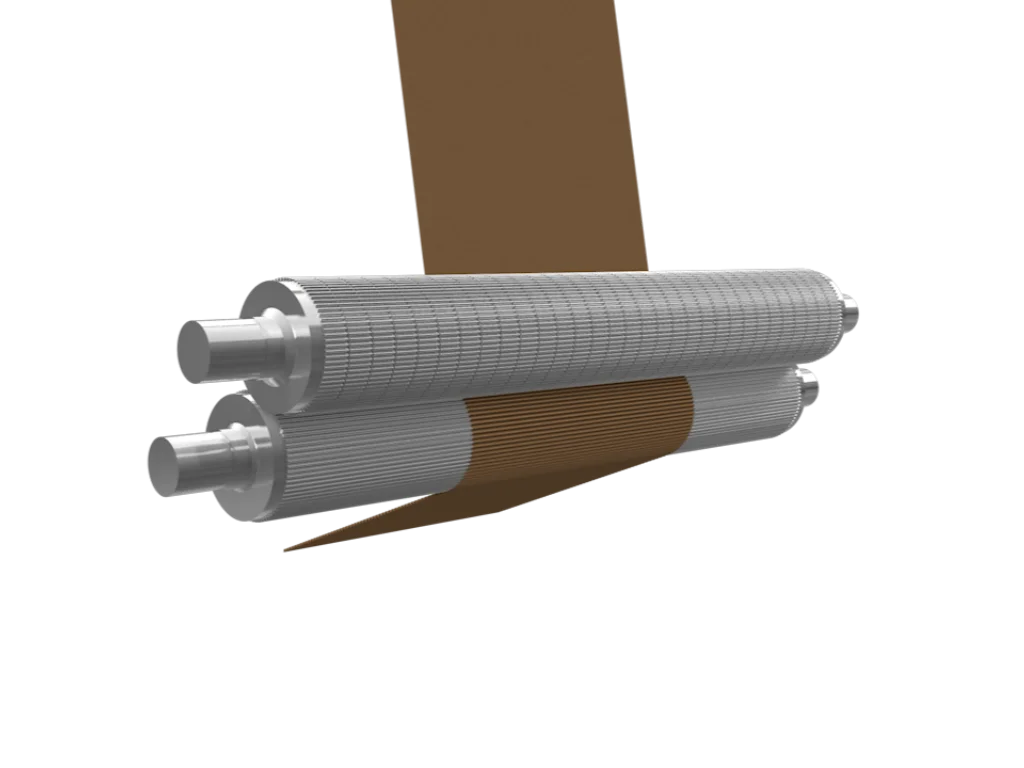
Corrugating rolls are critical components in the production of corrugated cardboard, playing a crucial role in forming the fluted medium that determines the strength and quality of corrugated board. Extending the life of corrugating rolls not only enhances production efficiency and reduces costs but also ensures consistent product quality.
Here are practical and professional tips to help maximize the lifespan of your corrugating rolls.
1. Regular Maintenance and Inspection
- Daily Checks: Inspect the rolls for any visible signs of wear, damage, or contamination.
- Weekly Maintenance: Clean the rolls thoroughly to remove any buildup of adhesive or paper dust.
- Monthly Inspection: Measure the roll diameters and check for any signs of uneven wear.
Regular maintenance ensures stable operation and prevents minor defects from developing into costly failures.
2. Proper Storage
a.Corrugating rolls are not solid on the surface and are susceptible to moisture penetration from the environment, leading to corrosion and coating damage. They should be stored in a dry environment.
b. Upon delivery, the corrugating rolls are coated with silicone oil, effective for up to three months. If not used for an extended period, regularly reapply silicone oil to prevent moisture penetration and corrosion.
c. If the rolls are not in use and stored in a warehouse, clean the surface of any contaminants and apply silicone oil for protection.
3. Paper Quality Matters
a. The sand content in corrugated paper directly affects the lifespan of the corrugating rolls. High-hardness sand particles can cause dents and severe coating damage during the corrugation process.
b. Use corrugated paper with an ash content of less than 4%.
4. Gap Control of Corrugating Rolls
a.Check the parallelism of corrugating rolls at least once a month.
b.Ensure correct installation to maintain proper gaps between corrugating rolls, suction hoods, pressure rolls, and glue rolls.
c.Tighten suction hoods and wind blades regularly to prevent vibration-induced loosening that could scratch the roll surface.
d.During production, use the minimum necessary pressure for corrugating and pressure rolls to reduce wear.
When switching from wide to narrow paper widths, adjust cylinder or air pressure accordingly to avoid contact without paper.
5. Temperature Control
a. Before steaming, pre-rotate the rolls for a few minutes to prevent sudden deformation.
b. Regularly check the temperature of the corrugating rolls and pressure rolls to prevent temperature drops due to condensation.
c. Check the siphon pipe position and ensure smooth condensate discharge for stable heating performance.
6. Adhesive Management
a. Use high-quality adhesives that do not contain abrasive particles.
b.Ensure the adhesive application system is well-maintained to avoid over-application, which can cause buildup on the rolls.
7. Material Quality Control
a.Use high-quality paper with consistent moisture content to reduce stress on the rolls.
b.Avoid low-grade recycled paper containing contaminants that accelerate wear.
8. Eccentricity Adjustment
a.Regularly check the eccentricity of the rolls to ensure even force distribution during rotation.
b.Use professional equipment and techniques to adjust the eccentricity of the rolls, preventing uneven wear caused by eccentricity.
9.Corrugating Roll Cleaning
a. During production, adhesive and paper fibers may accumulate on the surface of the corrugating rolls. Clean the rolls promptly after production to prevent hardened adhesive from damaging the surface coating.
b. Do not use water to clean the rolls when they are hot.
c. After cooling, use water or gas to clean the rolls.
d. After cleaning, apply silicone oil to protect and maintain the roll surface.
10.Manufacturer Support and Service Agreements
a.Establish service agreements with roll manufacturers for regular maintenance and emergency support.
b.Leverage the expertise of vendors for advanced repair and refurbishment services.
At RMM, we provide comprehensive technical support and after-sales services to help customers extend the lifespan of their corrugating rolls and ensure your corrugating rolls always operate at their best performance — delivering consistent quality, longer service life, and reduced downtime.