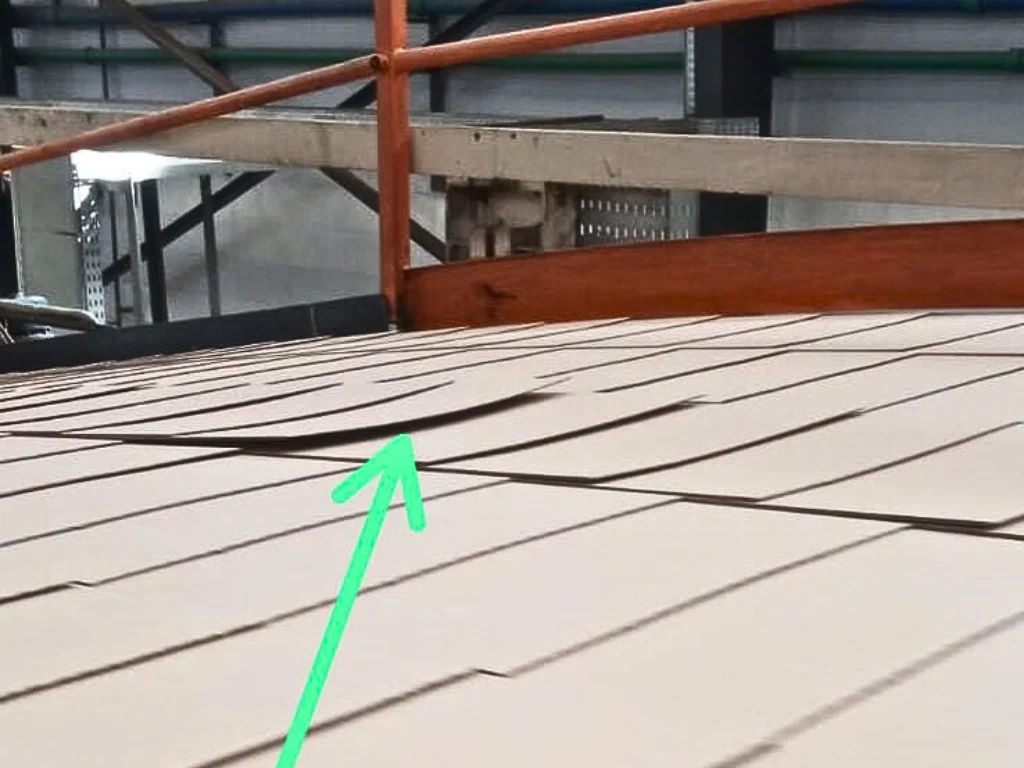
Warping is one of the most common and challenging quality issues in corrugated board production. It directly affects the adhesion of preprinted liners, the accuracy of die-cutting, and even the stacking and appearance quality of finished boxes. Therefore, identifying the causes of warping and implementing effective preventive measures are essential for maintaining high board quality and production efficiency.
1. Definition: Cross Direction and Machine Direction
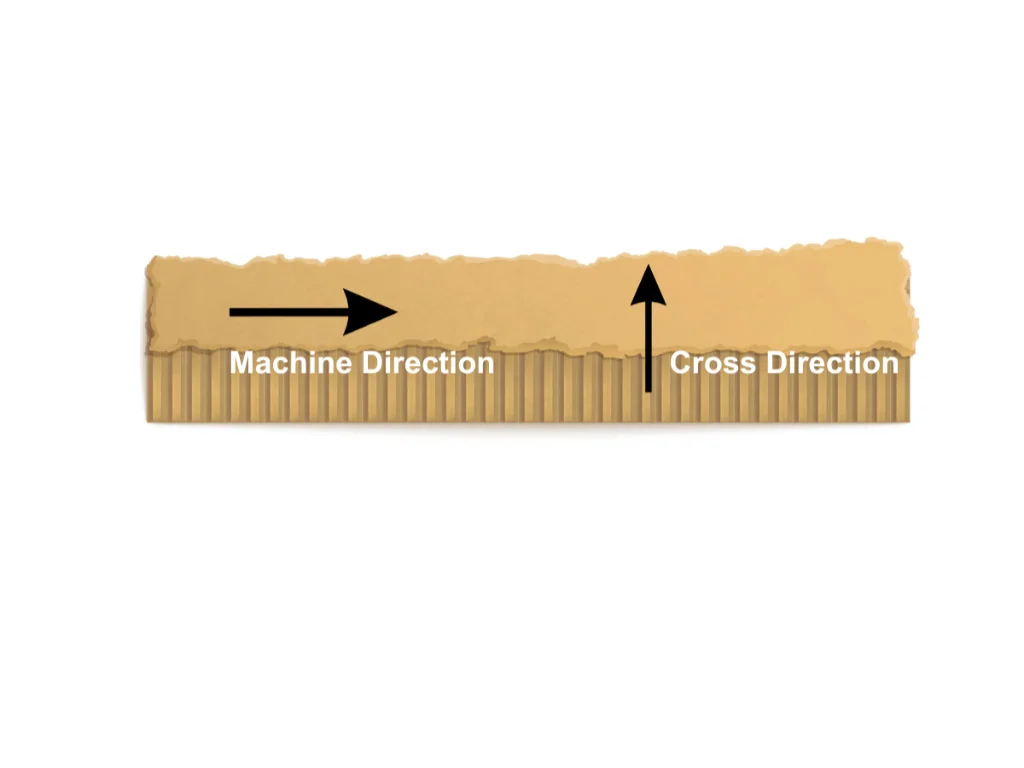
To effectively analyze and eliminate warping, it is crucial to understand the structural directions of corrugated board:
- Cross Direction(CD): Parallel to the flute grooves of the corrugated medium, also known as the paper’s width direction.
- Machine Direction (MD): Perpendicular to the flute grooves, aligned with the running direction of the board on the production line.
2. Classification of Warping Types
Corrugated board warping can generally be categorized into five main types:
- Cross Direction Upward Warp (CD-Up)
- Cross Direction Downward Warp (CD-Down)
- Machine Direction Upward Warp (MD-Up)
- Machine Direction Downward Warp (MD-Down)
- S-Shaped or Diagonal Warp
3. Major Causes of Warping
Warping is typically the result of multiple factors interacting at the same time. The most common causes include:
(1) Moisture Content Imbalance
Differences in moisture between liner and medium papers lead to uneven shrinkage and expansion.
- When the inner liner has higher moisture than the outer liner, the board tends to warp upward in the Cross Direction .
- Conversely, when the outer liner has more moisture, the board may warp downward in the Cross Direction.
- Uneven moisture across the paper width can cause S-shaped or diagonal warping.
(2)Equipment and Mechanical Accuracy
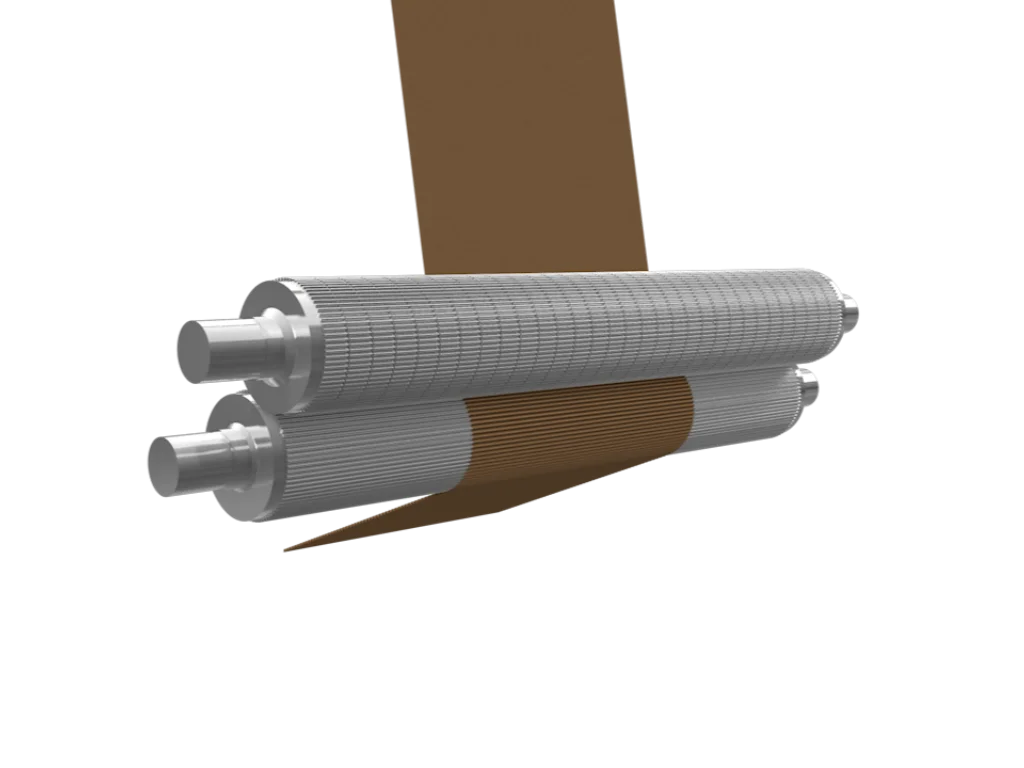
Equipment accuracy is critical to board flatness, and the corrugating rolls play the most decisive role. Worn flutes, profile deviation, temperature inconsistency, or misalignment between upper and lower rolls can all cause uneven flute height and bonding pressure, leading to CD or MD warping. Even slight errors in roll straightness, middle-high curve, or vacuum performance affect paper take-up and shrinkage. Regular calibration and precise roll maintenance are essential to keep flute formation consistent and prevent warping at its source.
(3) Paper Tension Imbalance
Uneven tension between the liner and medium is one of the main causes of Machine Direction (MD) warping. When the liner runs with excessive tension, it stretches during production and contracts after cooling, pulling the board upward in the MD direction. Conversely, if the medium carries higher tension or the liner tension is too low, the board may curl downward.
Improper brake force, uneven unwind tension, bridge accumulation, and speed mismatch between the single facer and double-backer can all create tension imbalance along the MD.
(4) Environmental Conditions
Temperature and humidity variations in the workshop affect paper moisture content.
- High temperature & humidity: paper absorbs moisture and expands.
- Low humidity: paper loses moisture and shrinks.
Frequent environmental fluctuations can trigger curling even after production.
(5) Process Control Issues
Uneven glue application, improper preheating settings, or mismatched production speeds may cause each layer to shrink differently, leading to warping.
To minimize corrugated board warping, manufacturers should maintain balanced moisture, tension, and temperature across all paper layers. Ensuring uniform moisture content between liners and medium prevents uneven shrinkage; precise equipment alignment and consistent glue application help maintain pressure and bonding balance; while controlling web tension and optimizing preheating settings stabilize both cross and machine directions. Additionally, maintaining stable workshop conditions—around 20–25°C and 50–60% humidity—and properly stacking finished boards during cooling can effectively prevent deformation and ensure the board remains flat and dimensionally stable.