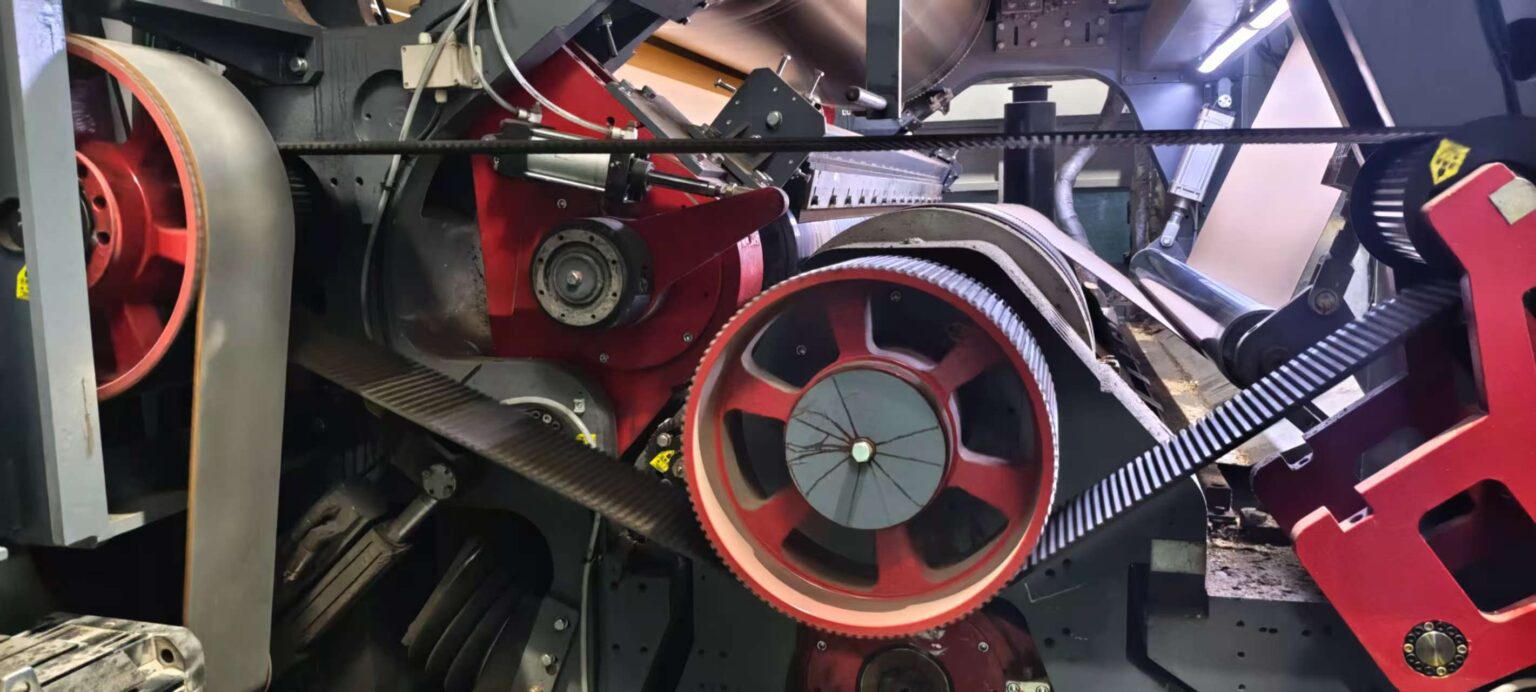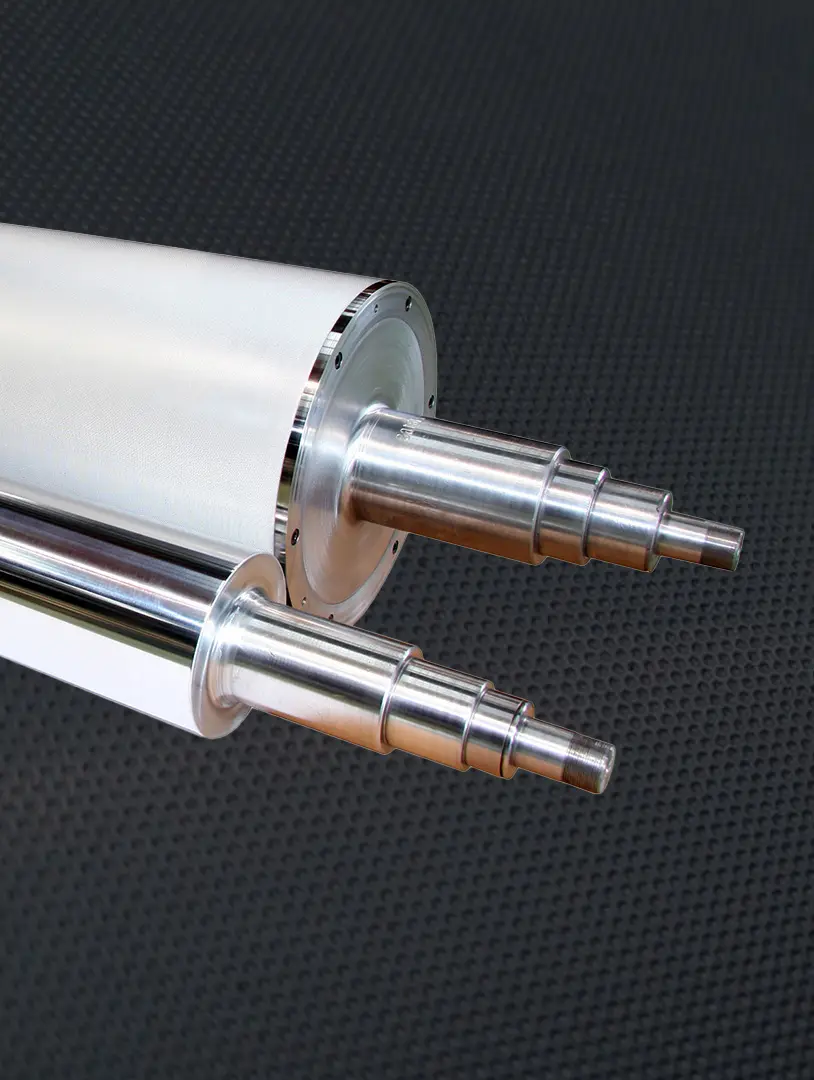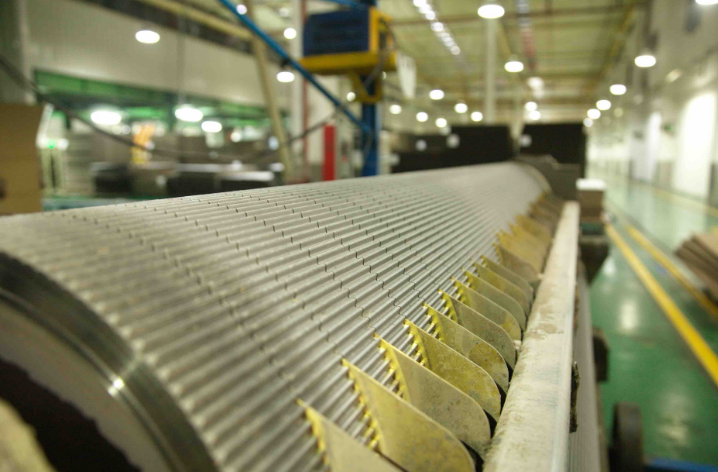
Corrugating rolls operate under continuous heat, pressure, and friction during corrugated board production. Over time, improper adjustment, uneven loading, excessive wear, poor maintenance, or sudden temperature changes can affect roll geometry and lead to deformation. When a corrugating roll no longer maintains its designed shape and alignment, flute formation, board caliper, and production stability can also be affected.
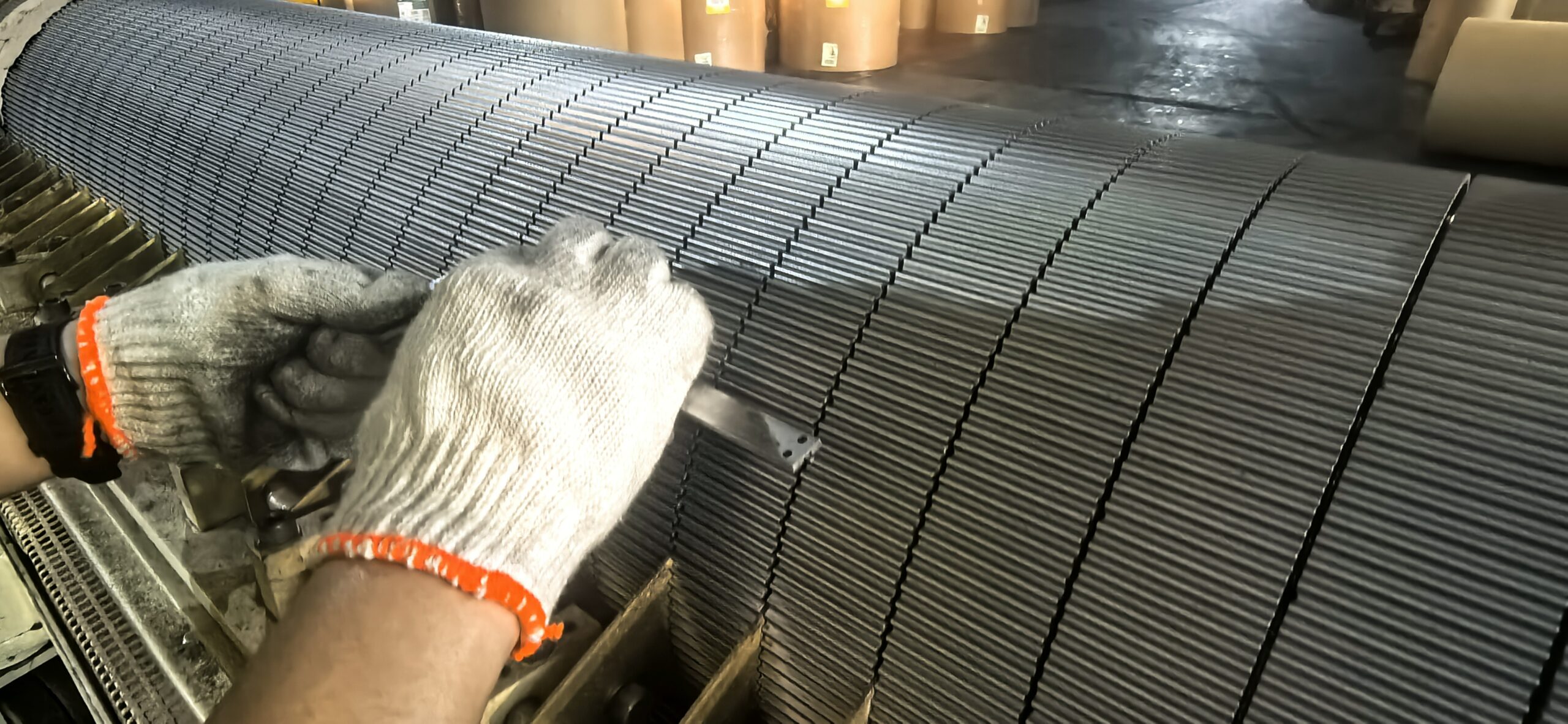
What Causes Corrugating Roll Deformation and Excessive Wear?
1. Paper Quality and Surface Contamination
Corrugating medium has a direct impact on roll wear. Paper containing excessive dust, sand, or other hard particles creates greater friction between the paper and the flute surface. Over time, this can accelerate flute wear and affect the original profile.
Using suitable paper grades and keeping the paper path clean can help reduce unnecessary wear.
2. Repeated Production on the Same Roll Area
When a wide corrugating roll is repeatedly used to produce narrow-width board in the same position, the center section of the roll receives much more wear than the unused areas.
This can gradually create a center-worn or center-low condition, affecting flute height and pressure distribution when wider board is produced.
Changing the production position when possible can help distribute wear more evenly across the working width.
3. Excessive Production Speed
Higher production speeds increase mechanical vibration, dynamic loads, and friction between the paper and corrugating rolls. If a machine is continuously operated near its maximum speed, unstable running conditions may accelerate roll wear.
Production speed should therefore be matched to the corrugator configuration, paper grade, roll condition, and actual production requirements.
4. Poor Surface Treatment Quality
The durability of a corrugating roll also depends on the quality of its surface treatment.
An improperly controlled coating or repair process may result in insufficient wear resistance, uneven coating thickness, or premature surface deterioration. For worn rolls requiring refurbishment, selecting a qualified manufacturer with controlled coating, grinding, and inspection processes is essential.
5. Incorrect Roll Adjustment
Incorrect roll adjustment can create uneven pressure between the upper and lower corrugating rolls. Excessive pressure, poor parallelism, or incorrect settings can increase flute-tip wear and mechanical stress.
The corrugating rolls should be properly aligned and adjusted to maintain stable and uniform contact conditions.
6. Poor Bearing and Lubrication Condition
Bearings play an important role in maintaining correct roll meshing and running stability.
Insufficient lubrication, excessive bearing clearance, or damaged bearings can cause vibration and uneven loading. This may affect flute engagement and increase wear on the roll surface.
Lubricants should also be selected according to the operating temperature and component requirements. High-temperature areas require suitable high-temperature grease rather than general-purpose grease.
How to Reduce Corrugating Roll Deformation
Proper operation and maintenance can help protect corrugating rolls throughout their service life.
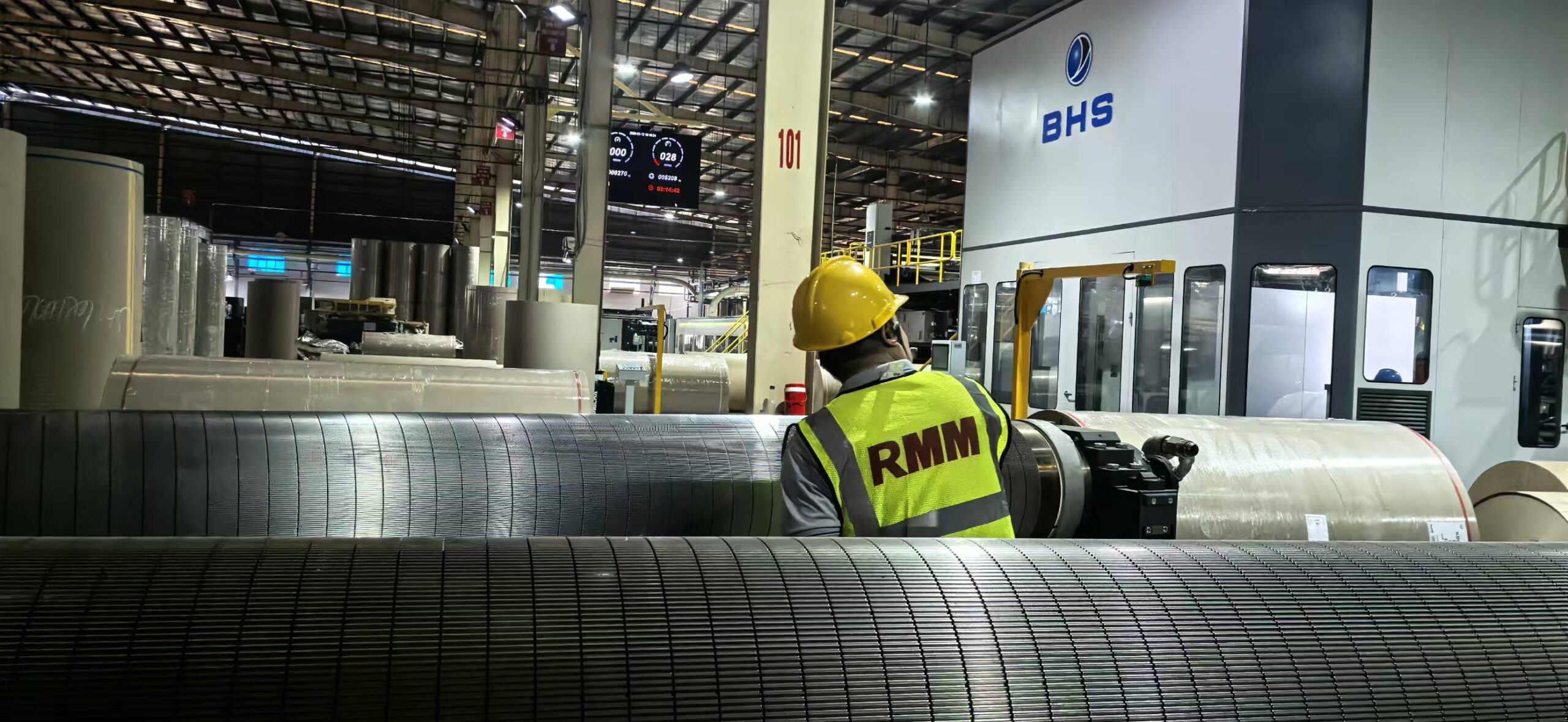
1. Avoid Sudden Cooling
After production, the corrugating rolls should not be cooled suddenly with water. Rapid temperature changes can create thermal stress and may contribute to deformation.
Allowing the rolls to cool gradually under controlled conditions is a safer approach.
2.Check Parallelism and Pressure
Before production, check the parallelism, fastening condition, roll gap, and pressure settings. Uneven pressure can accelerate local wear and affect flute formation.
For corrugating roll adjustment, the roll configuration and machine design should be considered together rather than relying on a single setting.
3.Maintain Proper Lubrication
Regular lubrication and inspection of bearings and other moving components help maintain stable roll operation. Correct lubrication can reduce mechanical resistance and unnecessary vibration.
4.Monitor Flute Height and Roll Condition
Corrugating rolls should be inspected periodically for flute height, flute profile, surface condition, runout, and wear.
When flute wear exceeds the required production specification, timely regrinding or refurbishment can help restore the designed profile and maintain board caliper.
Corrugating Roll Deformation Starts with Prevention
Corrugating roll deformation is rarely caused by a single factor. Paper quality, production speed, roll adjustment, surface treatment, bearing condition, lubrication, and cooling practices can all influence roll performance.
For this reason, maintaining a corrugating roll is not simply about extending its service life. It is about protecting the flute profile, dimensional stability, and consistent board formation throughout its working life.
At RMM, corrugating roll manufacturing and refurbishment involve controlled machining, surface treatment, grinding, and inspection to help maintain the required flute geometry and running performance.
Conclusion
A corrugating roll is designed to operate under demanding conditions, but even a high-quality roll requires proper adjustment and maintenance.
By controlling production conditions, maintaining correct alignment and lubrication, avoiding sudden cooling, and monitoring flute wear, manufacturers can reduce unnecessary roll deformation and maintain more consistent corrugated board production.