Poor parallelism ruins board quality and wears out your rolls. This hidden issue causes defects like collapsed flutes and costs you money in the long run.
To check corrugating roll parallelism, you can use the carbon paper test for a visual check, a feeler gauge for a precise measurement, or a laser alignment tool for the highest accuracy. These methods identify alignment issues that cause production problems and premature roll wear.
Why is Poor Corrugating Roll Parallelism a Big Problem?
Are you seeing defects like collapsed flutes or inconsistent board thickness? Poor roll alignment is often the hidden culprit, damaging your product quality and machine health.
Poor parallelism leads to uneven flute formation, collapsed flutes, inconsistent board thickness, and poor gluing. It also dramatically accelerates wear on your corrugating rolls, shortening their lifespan and increasing operational costs.
How Do You Perform a Carbon Paper Test for Parallelism?
Do you need a quick and simple way to check roll alignment? The carbon paper test is a classic method that gives you a clear, visual answer without needing special tools.
On a hot machine, place carbon paper on a liner sheet at the ends and middle. Run it through the rolls. If the imprints are even across the sheet, your rolls are parallel. Uneven marks mean there is an alignment problem.
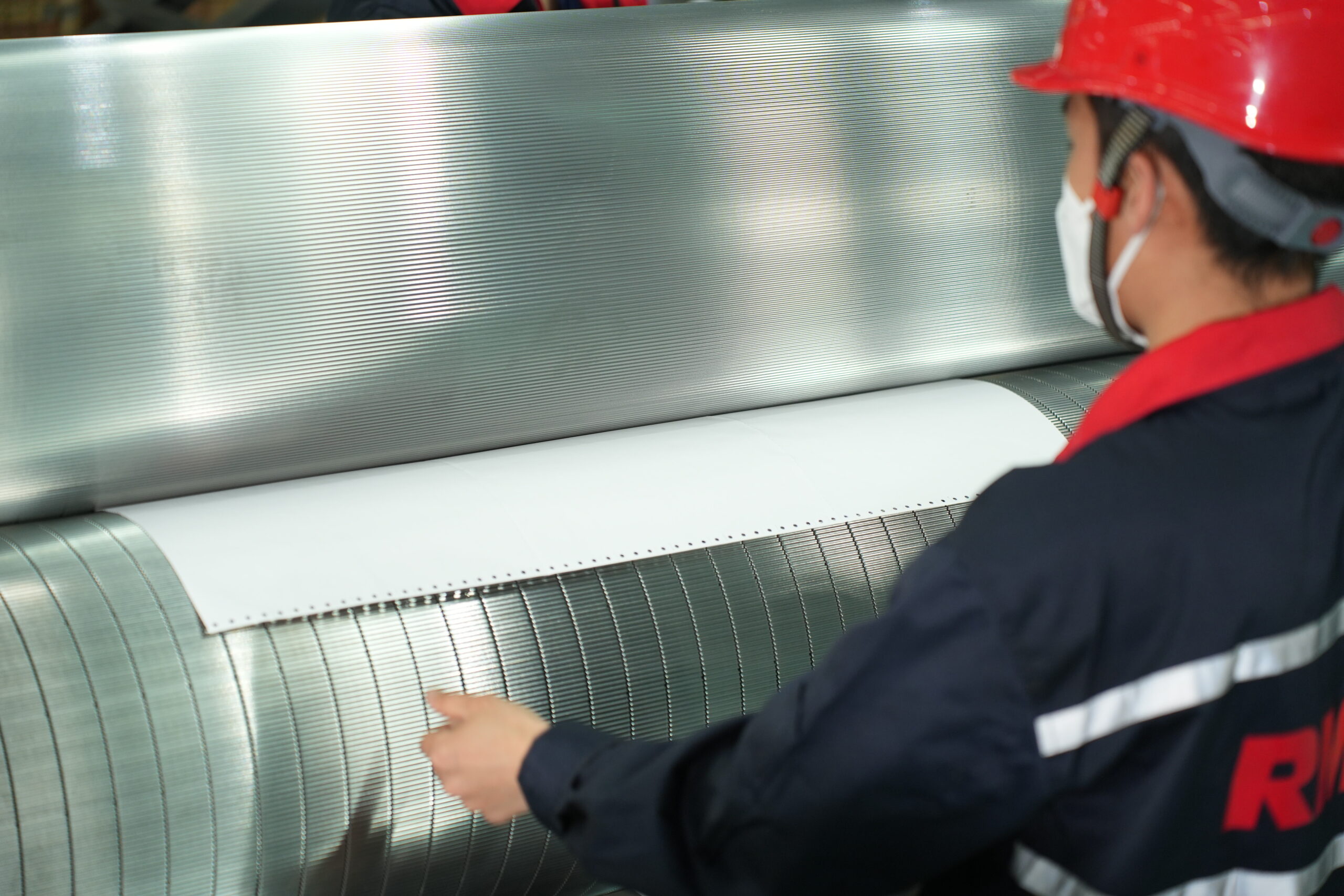
This method is great because it is so direct. You are literally seeing a map of the pressure between your rolls. It is a technique we have taught to plant operators for decades because it works. Here is how you do it step-by-step.
Performing the Carbon Paper Test
- Heat Up the Machine: Make sure your single facer is at its normal operating temperature, around 120°C. The pressure roll should also be set to its standard pressure.
- Prepare the Paper: Take a sheet of linerboard that is wide enough to cover the rolls. Place five sheets of carbon paper on it: one at each end (about 5cm from the edge), one in the middle, and one between the middle and each end.
- Run the Test: Carefully feed the linerboard with the carbon paper through the corrugating rolls. Let the machine run for a few rotations.
- Inspect the Imprints: Take the paper out and look at the marks left by the carbon paper.
- Good Parallelism: The imprints will be clear, even, and symmetrical across the paper.
- Poor Parallelism: You will see a difference. For example, the imprint might be much darker on the drive side than the operator side. This means the pressure is higher on one side, and your rolls need adjustment.
This test is straightforward and also helps you check for even pressure distribution. However, it requires a hot machine and the results depend a little on the operator's experience to interpret.
How Do You Use Precision Tools for Checking Parallelism?
When visual checks are not enough, you need more precision. Are your alignment issues small and hard to detect? Let's look at more accurate methods.
For higher accuracy, use a feeler gauge to measure the gap between the rolls at both ends while the machine is off. For the best precision and real-time data, a laser alignment tool is the ideal choice, though it costs more.
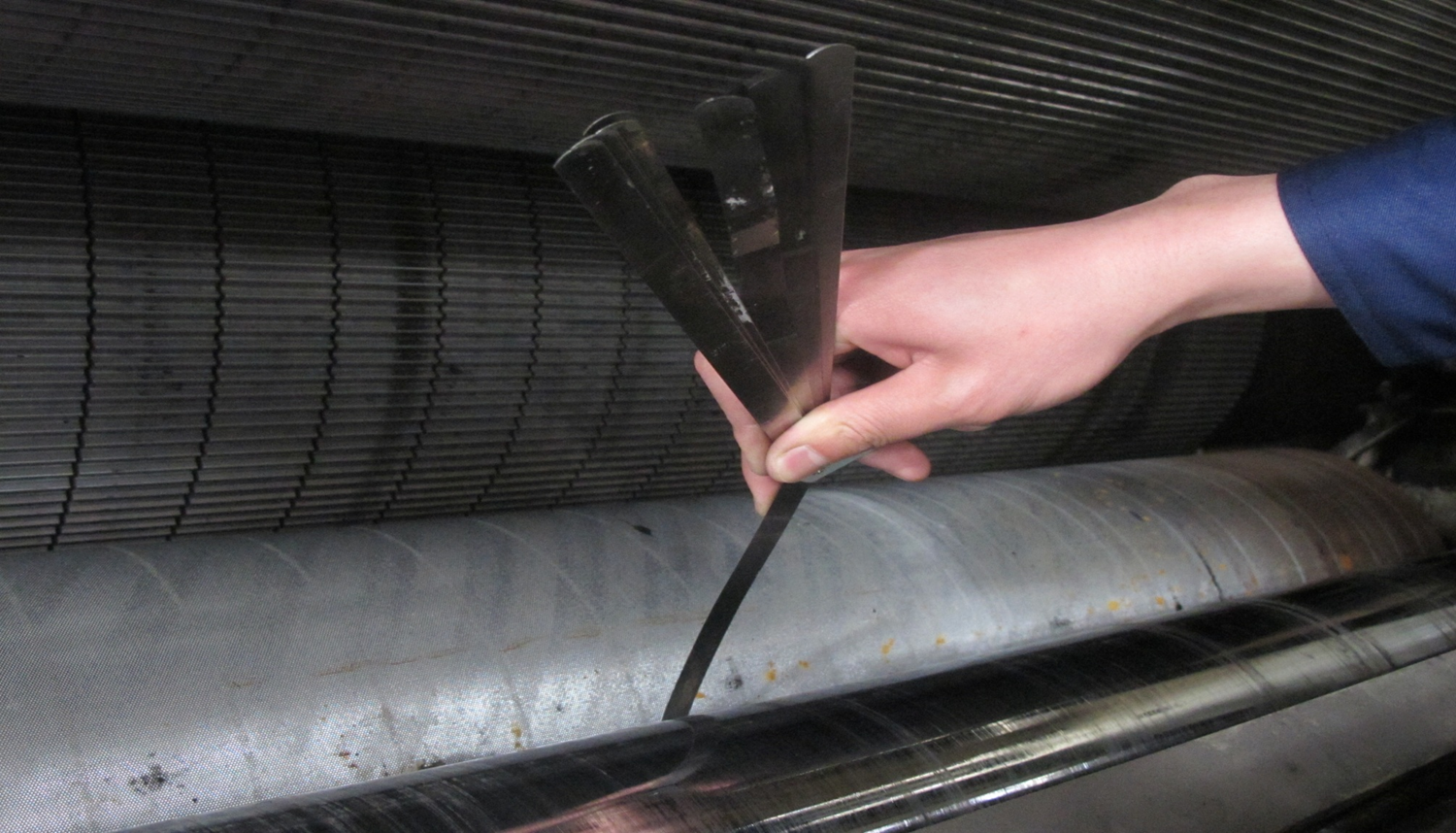
While the carbon paper test is good for a quick check, sometimes you need exact numbers, especially for high-speed lines or when troubleshooting tricky quality issues. For our clients running our high-performance tungsten carbide rolls, we always recommend using precision tools. They help protect your investment and maintain top quality.
The Feeler Gauge Method
The feeler gauge is a classic machinist's tool. It gives you a precise, numerical measurement of the gap between your rolls.
How to do it:
- Power off and lock out the machine.
- Make sure the rolls are clean.
- Use a feeler gauge to measure the gap between the upper and lower corrugating rolls at both the operator side and the drive side.
- Compare the measurements. The difference should not be more than the machine's tolerance, which is typically very small, around ±0.05mm. A larger difference means the rolls are not parallel.
The Laser Measurement Method
This is the most modern and accurate method. It uses a laser beam to measure parallelism with extreme precision.
How to do it:
- A laser emitter is mounted at one end of a roll, and a receiver is at the other.
- The laser scans along the roll's axis.
- The system's software calculates the deviation from perfect parallel alignment instantly.
Here is a quick comparison:
| Method | Precision | Cost | Best For |
|---|---|---|---|
| Feeler Gauge | High | Low | Regular checks, precise manual adjustment. |
| Laser Measurement | Very High | High | High-speed lines, new installations, advanced troubleshooting. |
For most factories, a combination of the carbon paper test for quick weekly checks and the feeler gauge method for more detailed monthly checks is a very effective strategy.
Conclusion
Checking your corrugating roll parallelism is essential for quality and roll life. Use carbon paper for quick checks and feeler gauges or lasers for precision. Regular checks prevent big problems.