Corrugated board is widely used in packaging because of its strength, lightweight structure, and versatility. From shipping cartons to protective packaging, it plays an essential role in modern logistics and manufacturing.
But how is corrugated board made? The process involves several stages, from preparing the paper reels to forming flutes, bonding layers, and cutting the finished sheets. Each step contributes to the quality and performance of the final board.
1. What Materials Are Used to Make Corrugated Board?
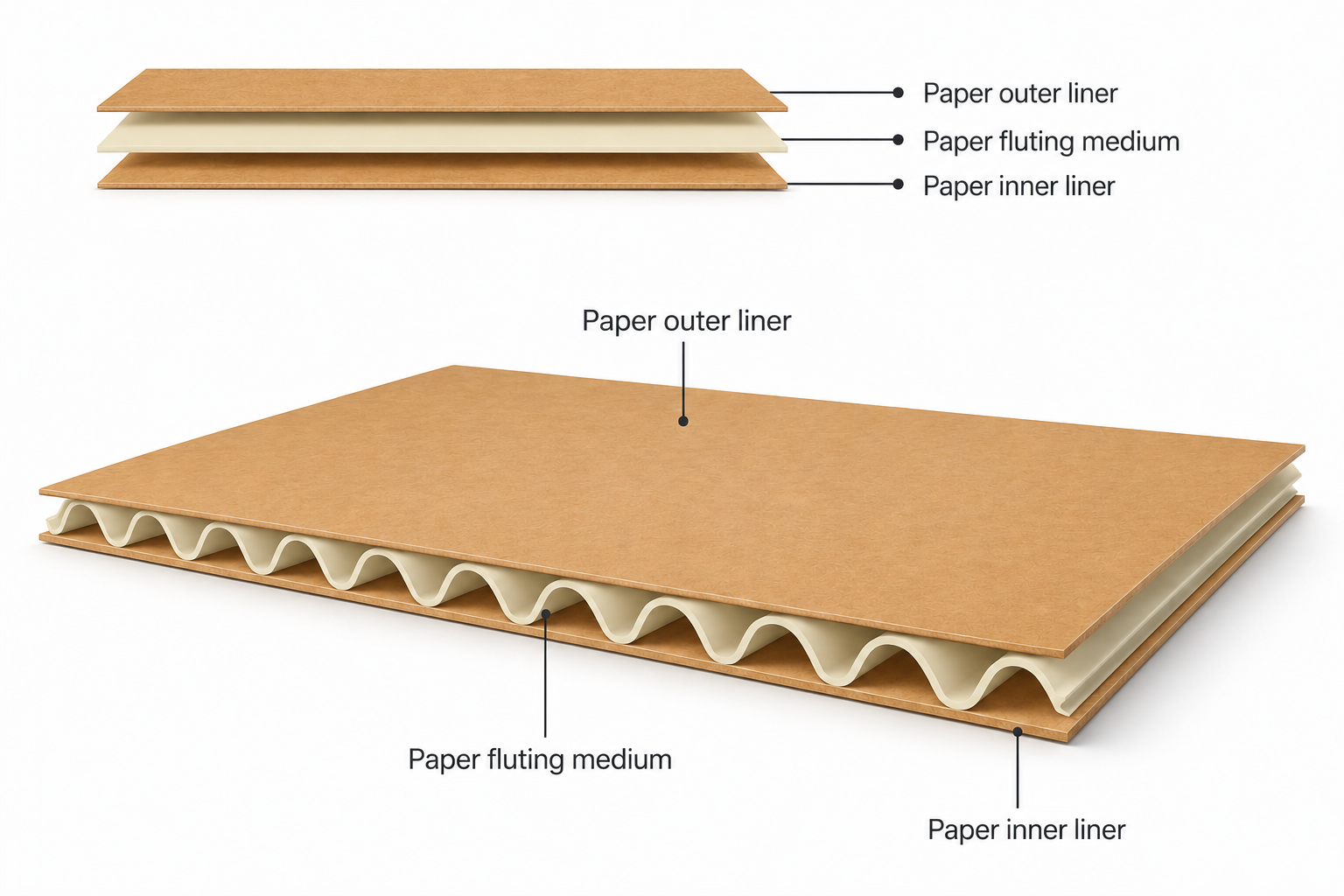
Corrugated board is made from two main types of paper:
- Linerboard: The flat paper layers on the outer surfaces of the board.
- Corrugating medium: The paper formed into a wavy structure between the liners.
The combination of these layers creates the characteristic structure of corrugated board. Depending on the packaging requirements, the board may consist of a single corrugated layer or multiple layers.
Paper properties such as basis weight, moisture content, and stiffness influence how the material behaves during production and affect the quality of the finished board.
2. Paper Preparation and Preheating
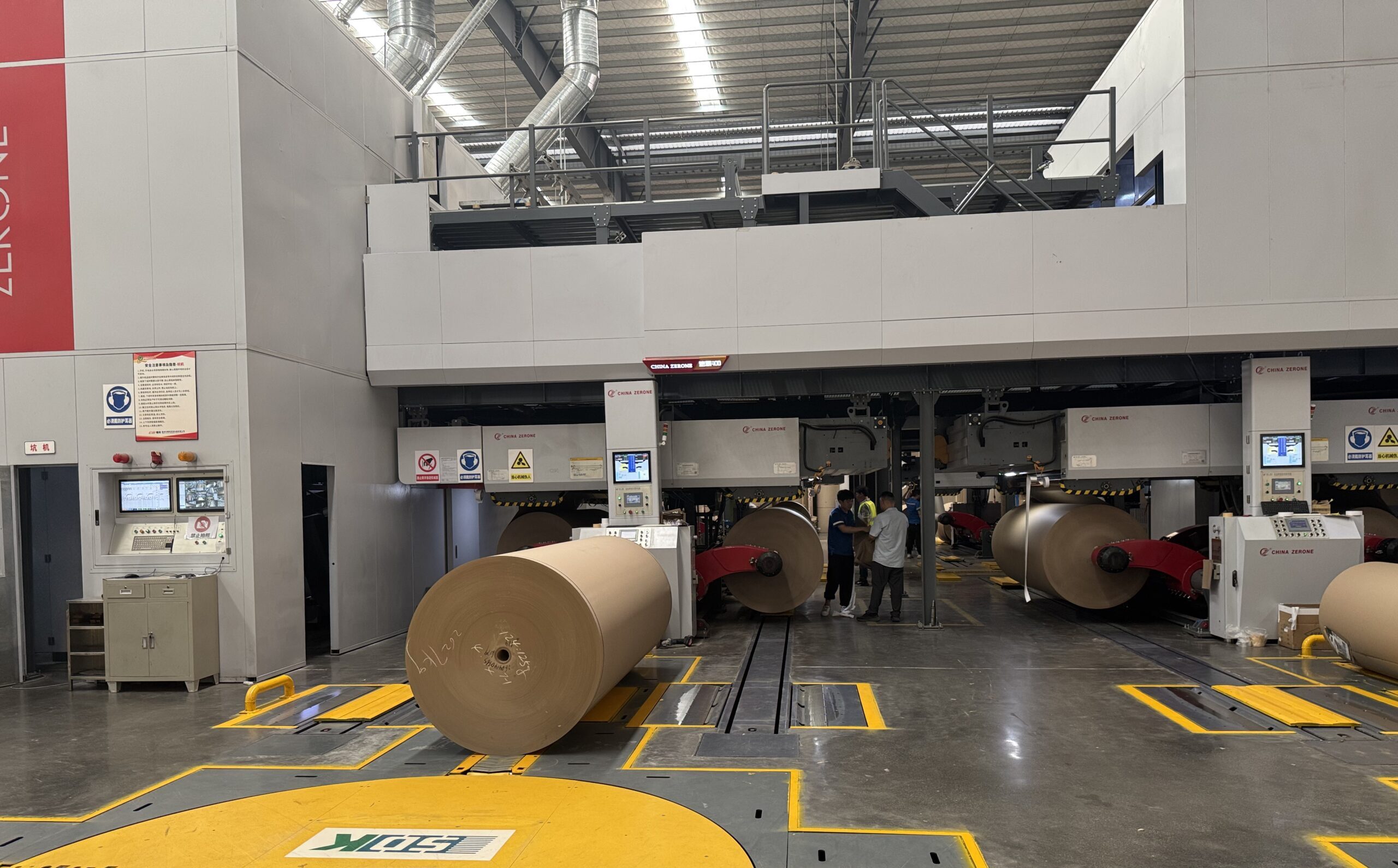
Before entering the corrugating process, paper reels are loaded onto the reel stands of the corrugator.
The paper is guided through the production line under controlled tension. Preheaters condition the paper using heat, helping adjust its moisture and temperature before flute formation and bonding.
Proper paper preparation is important for maintaining stable production. Variations in moisture, tension, or temperature can affect flute formation and the bonding process.
3. Flute Formation: The Role of Corrugating Rolls
 |
 |
|---|
Flute formation is one of the most important stages in corrugated board manufacturing.
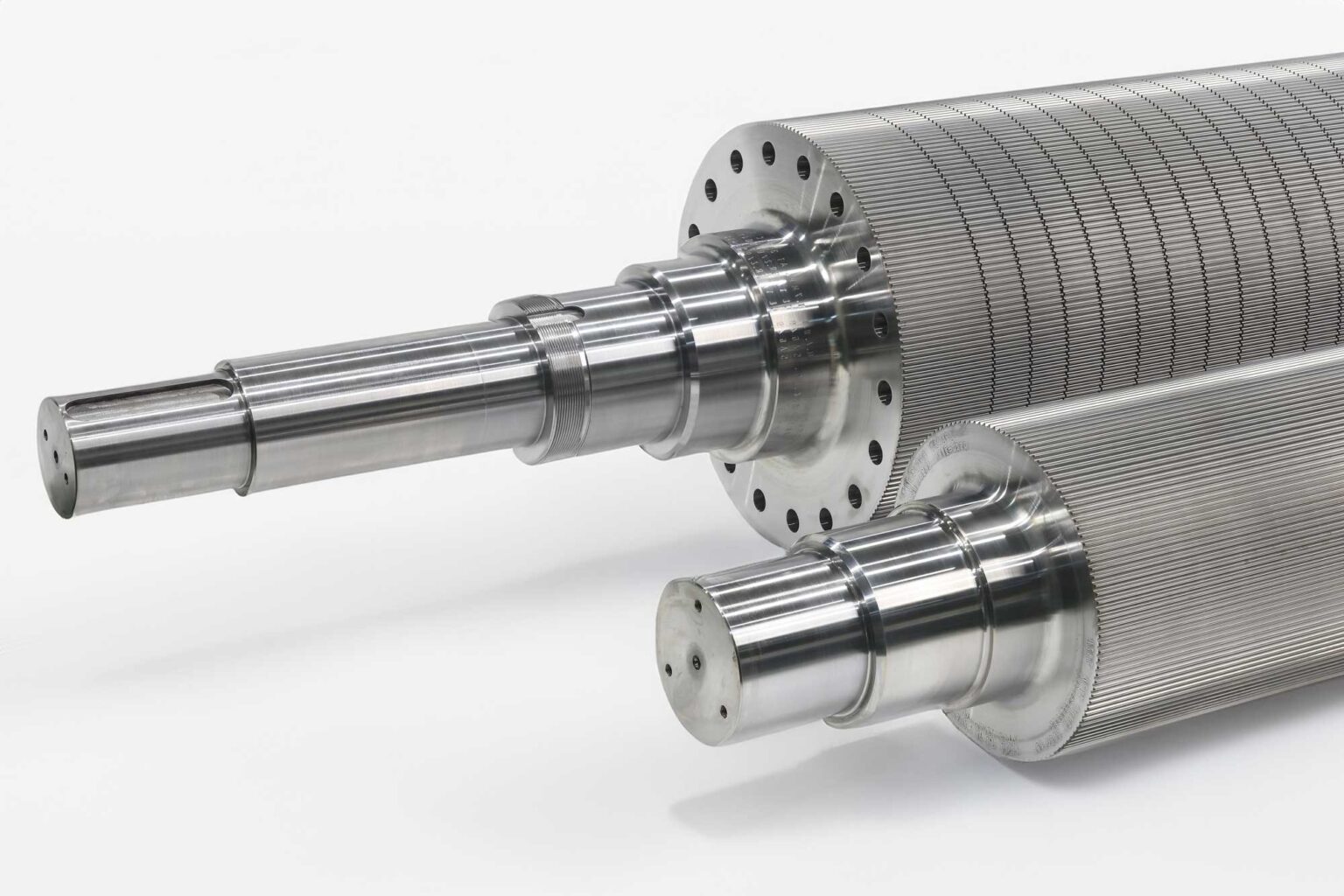
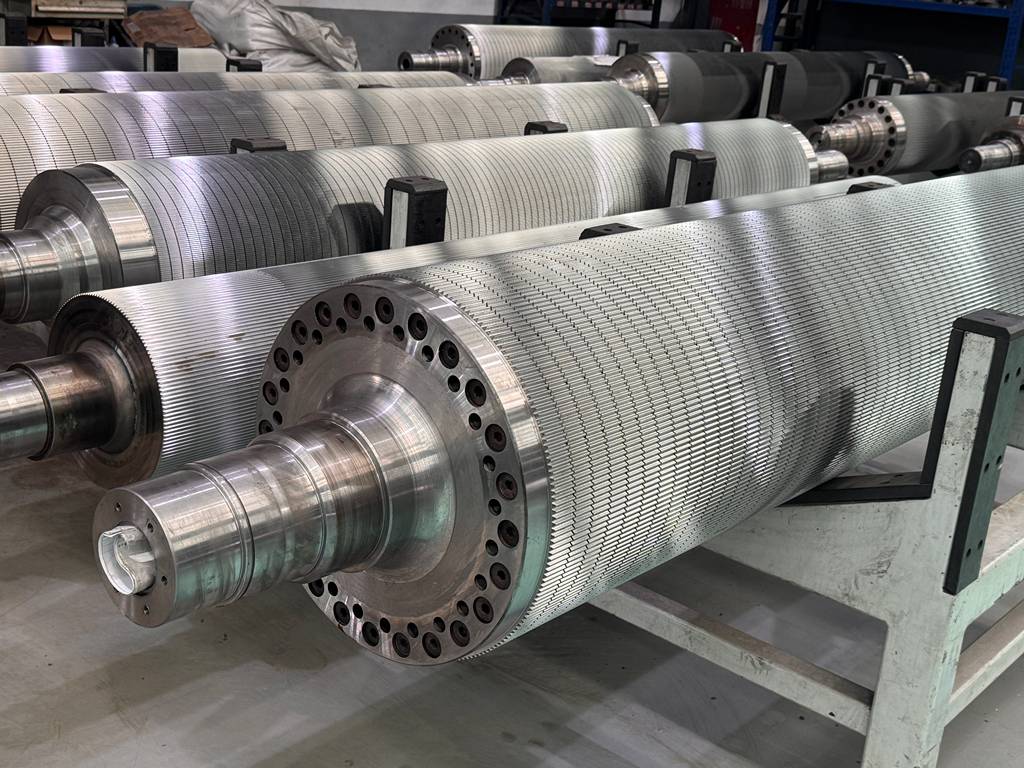
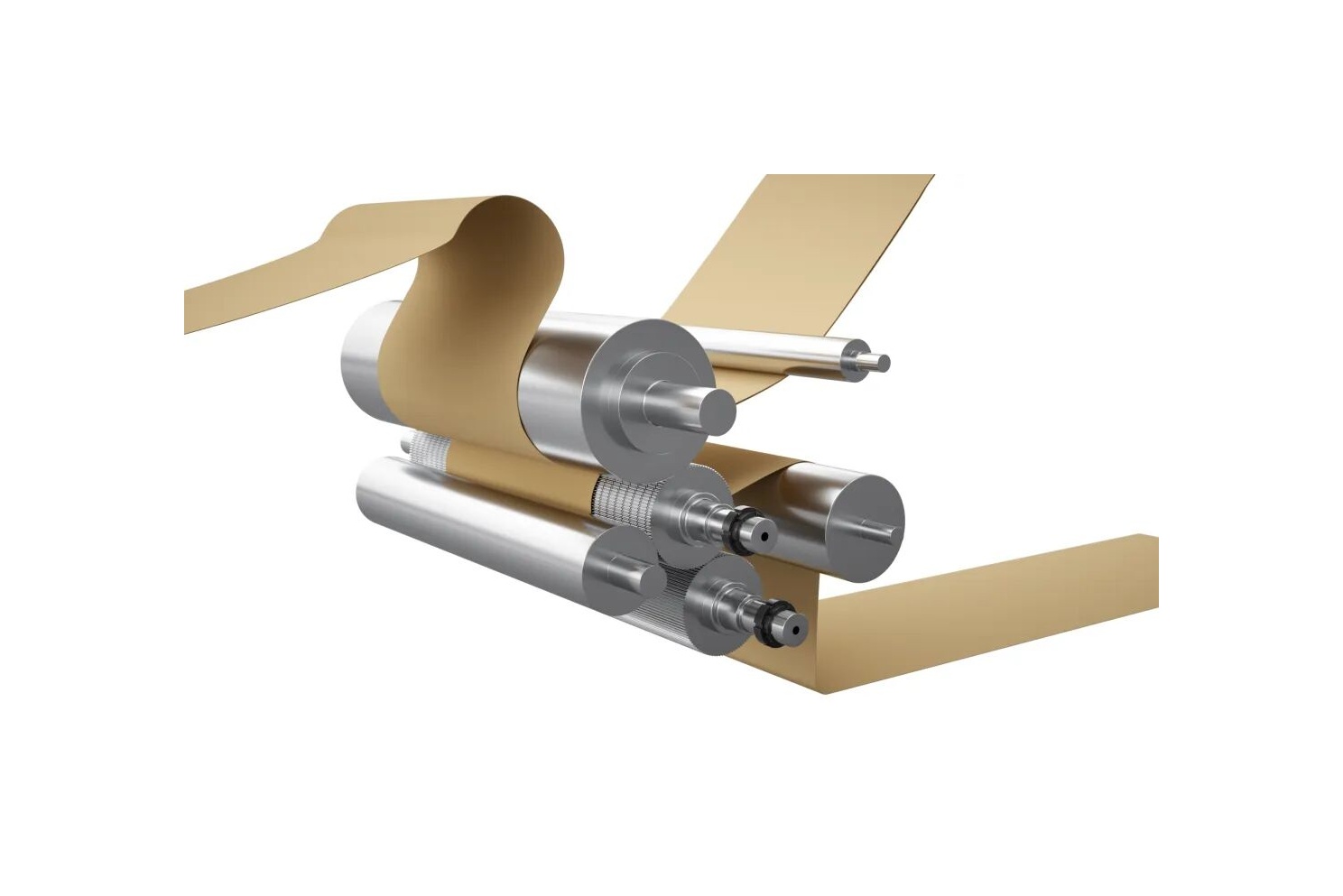
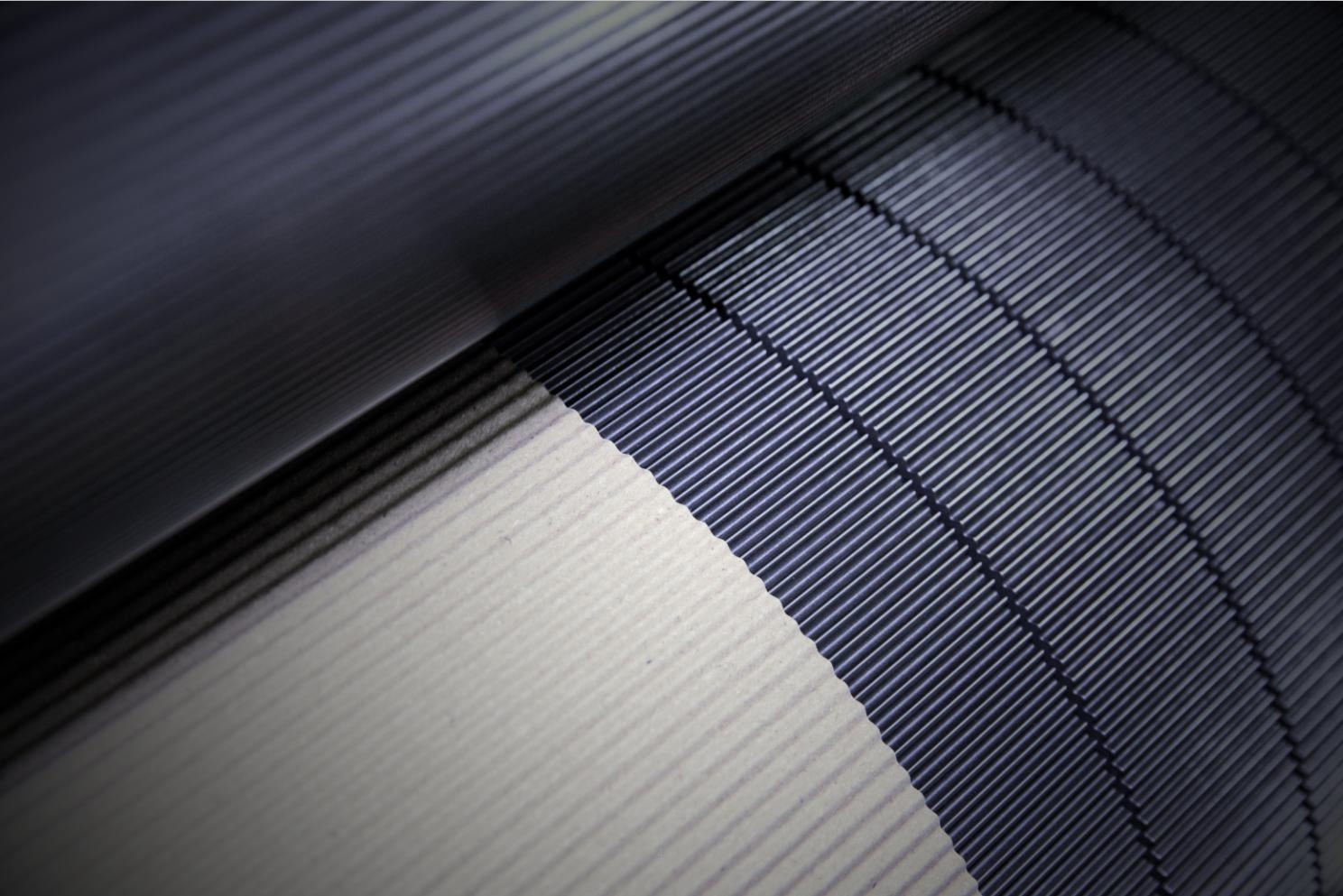
The corrugating medium passes between two corrugating rolls with matching flute profiles. Through the combined effects of heat and pressure, the paper is formed into a regular wave-shaped structure.
The flute profile determines the geometry of the corrugated medium. Different flute types offer different characteristics in terms of board thickness, cushioning, printability, and compression performance.
Common flute types include:
- A Flute: Relatively tall flutes, often used where cushioning is important.
- B Flute: A lower profile that provides a balance of strength and printability.
- C Flute: Commonly used for general-purpose shipping cartons.
- E Flute: A micro-flute profile suitable for packaging that requires a thinner board and a smoother surface.
- F Flute: An even finer profile often used in compact packaging applications.
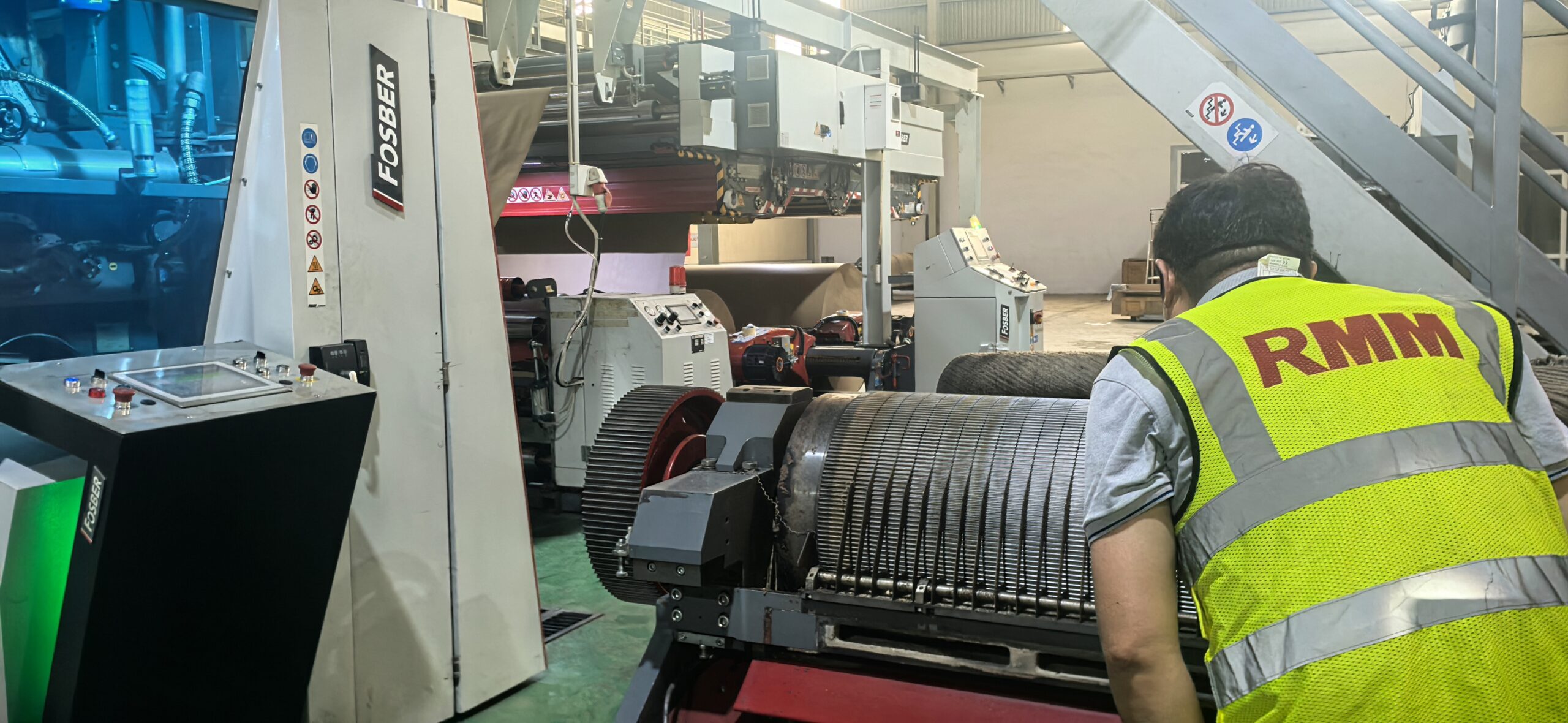
The performance of the corrugating rolls directly influences flute consistency. Roll profile accuracy, surface condition, and operating stability all contribute to the quality of flute formation.
As a manufacturer of corrugating rolls, RMM focuses on roll profile design, machining, surface treatment, and inspection to support consistent production across different flute requirements.
4. Adhesive Application and Single-Face Bonding
After the corrugating medium has been formed, adhesive is applied to the flute tips.
In the single facer, the corrugated medium is bonded to one linerboard, creating single-face corrugated board. The adhesive is typically starch-based and forms a bond when heat is applied.
The amount and distribution of adhesive, together with temperature and pressure, are important factors in achieving reliable bonding.
Insufficient or uneven adhesive application may lead to bonding issues, while excessive application can increase adhesive consumption and affect production efficiency.
5. Double-Facer: Bonding and Drying
The single-face web then moves to the double-facer, where the second liner is applied to the exposed flute tips.
Heat and pressure help the adhesive bond the second liner to the corrugated medium. The board passes through the heating and cooling sections to stabilize the structure.
At this stage, the board develops its final multi-layer structure. Stable temperature, suitable pressure, and proper machine operation are important for maintaining board flatness and bonding quality.
6. Slitting, Scoring, and Cutting
Once the board has been bonded and stabilized, it moves to the finishing section.
The main operations include:
- Slitting: Dividing the board into required widths.
- Scoring: Creating crease lines for folding.
- Cutting: Cutting the continuous web into sheets of specified lengths.
The finished sheets are then stacked and prepared for further converting processes, such as printing, slotting, die-cutting, and carton assembly.
Accurate slitting, scoring, and cutting help ensure that the sheets meet the dimensional requirements of the packaging design.
7. Quality Inspection of Corrugated Board
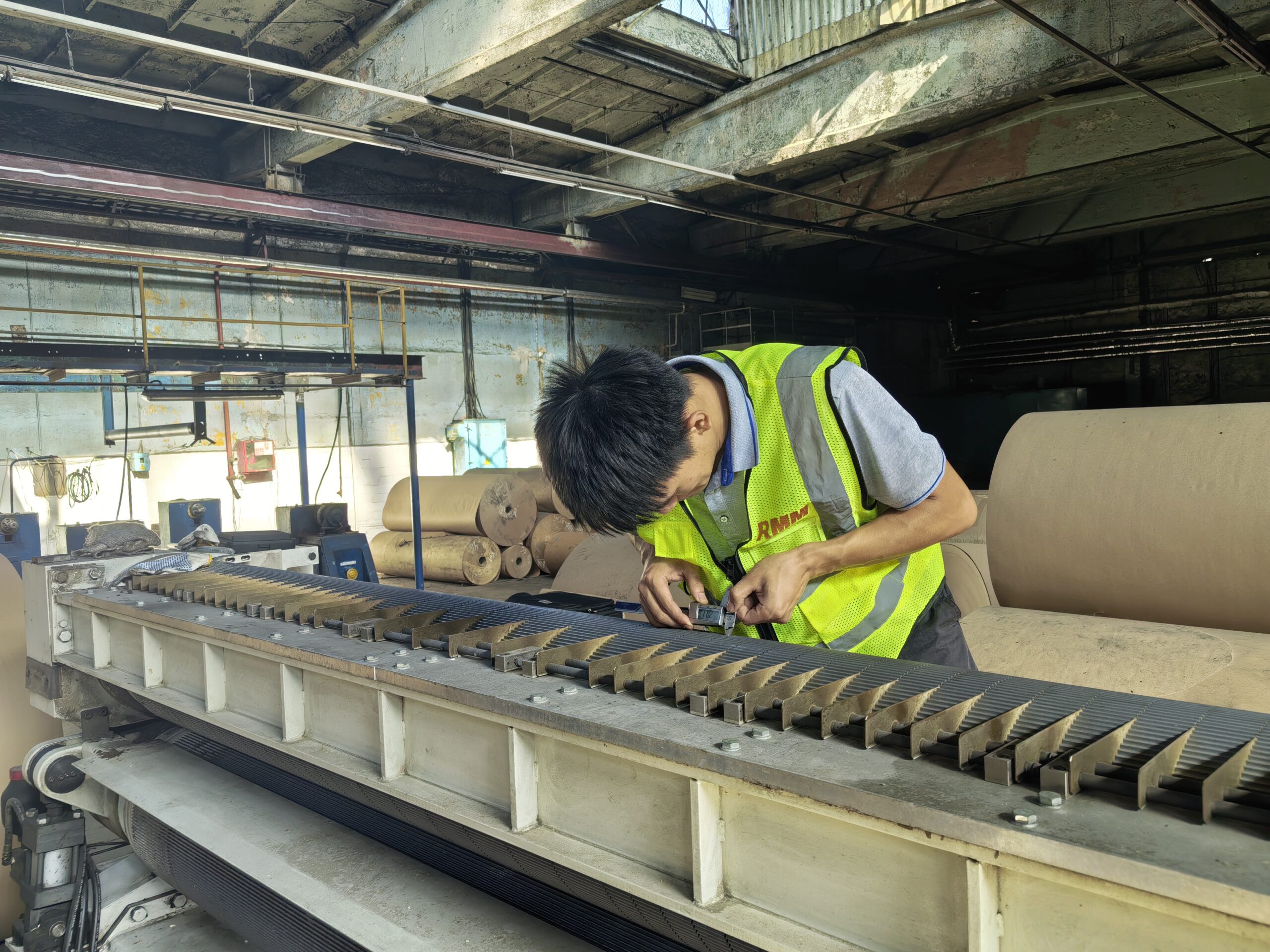
Quality inspection is carried out throughout the manufacturing process and on the finished sheets.
Common inspection items include:
- Flute formation and consistency
- Bonding quality
- Board thickness and flatness
- Edge condition and dimensions
- Compression and strength performance, according to the required specifications
The quality of corrugated board depends on the interaction of multiple factors, including paper properties, machine settings, adhesive application, and the condition of key production components.
 |
 |
|---|
Conclusion
Corrugated board manufacturing is a coordinated process that transforms paper reels into packaging material with a carefully engineered structure.
From paper preparation and flute formation to bonding, drying, and cutting, each stage contributes to the final board quality. Among these processes, flute formation is particularly important because the corrugating rolls shape the medium that gives corrugated board its distinctive structure.
Maintaining suitable process conditions and well-maintained equipment helps corrugated board manufacturers achieve consistent production and meet different packaging requirements.