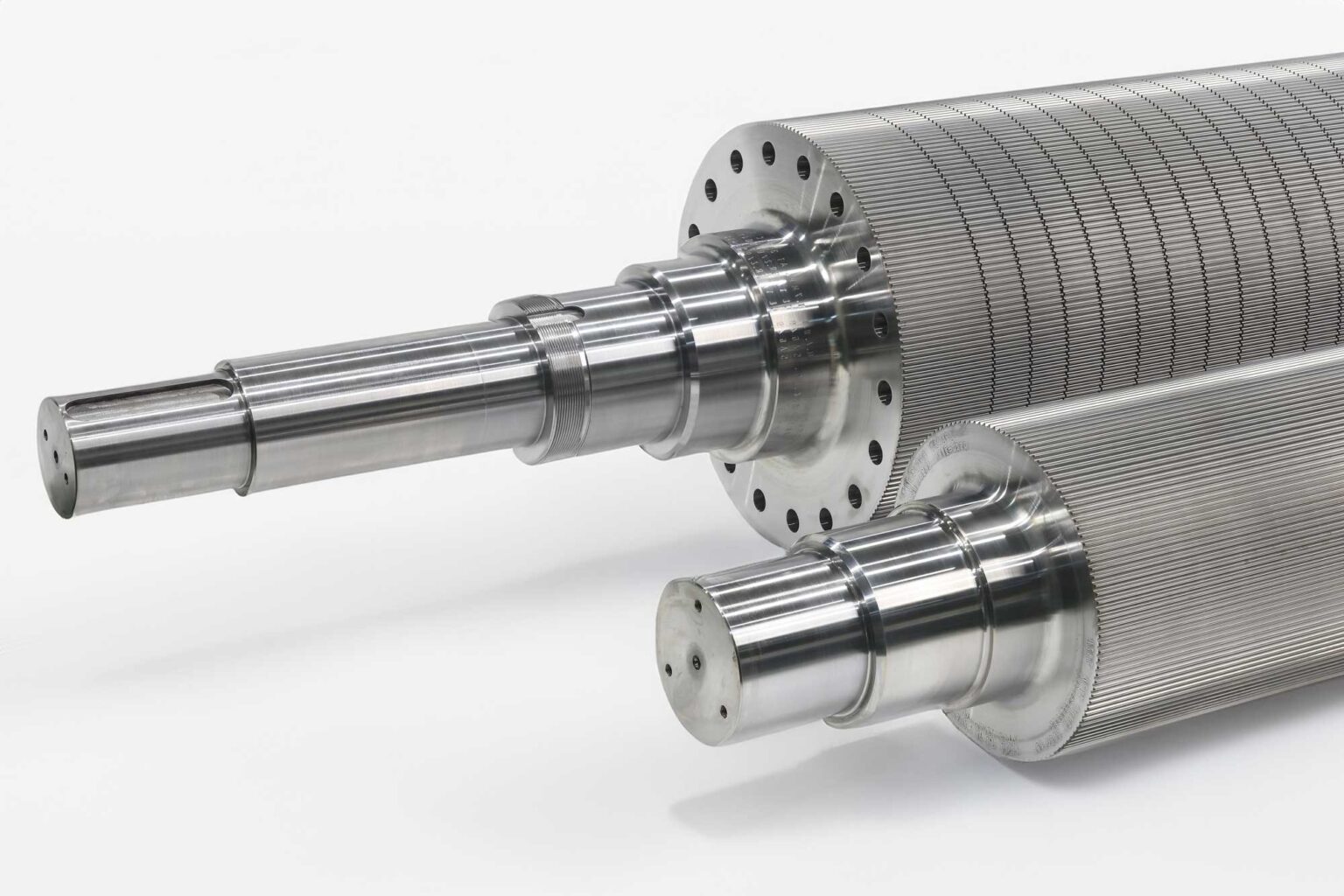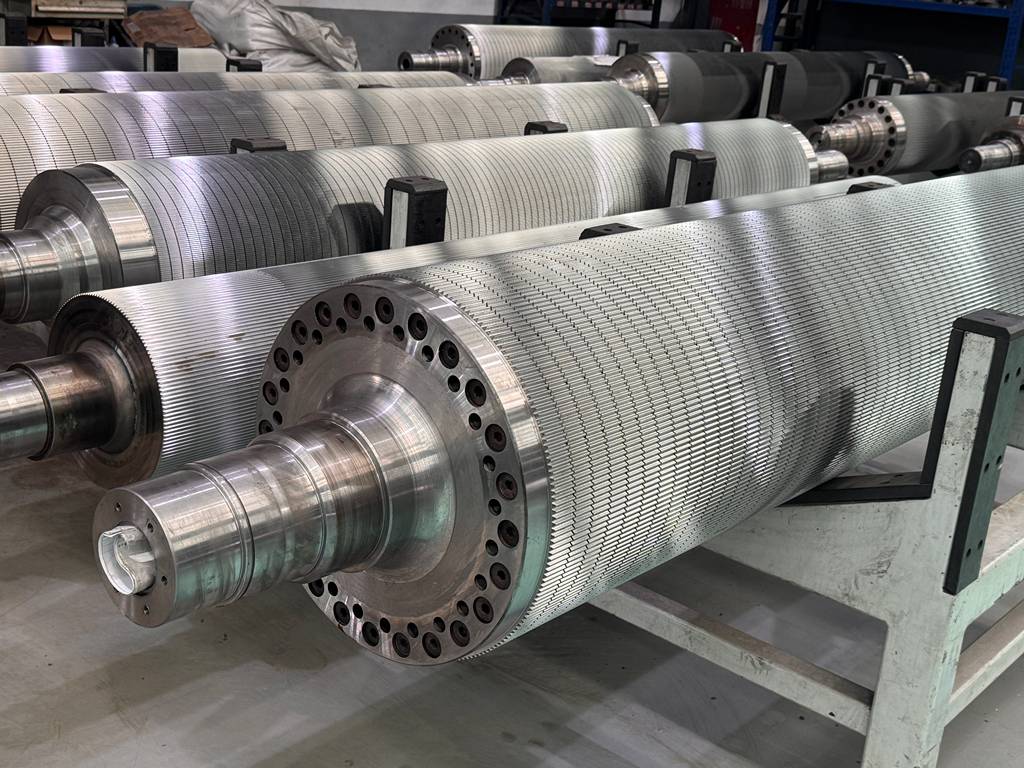
Corrugating rolls operate under continuous heat, pressure, and mechanical stress. Improper heat treatment, incorrect installation, and unsuitable grinding conditions can all contribute to surface cracks.
Cracking may damage flute profiles, affect corrugated board quality, and shorten roll service life. Understanding the causes is essential for effective maintenance and refurbishment.
1. Improper Heat Treatment
Heat treatment determines the hardness and wear resistance of corrugating rolls. However, poorly controlled heating, quenching, or tempering may generate excessive residual stress and lead to cracking.
Common types include:
- Longitudinal Cracks: May result from improper induction heating, unsuitable quenching conditions, or excessive transformation stress.
- Transverse Cracks: May develop when the hardened layer is uneven or insufficiently controlled, creating stress concentrations.
- Tempering-Related Cracks: Inadequate or delayed tempering may leave excessive residual stress, increasing the risk of cracking.
Prevention: Control heating temperature, induction speed, quenching conditions, hardened-layer depth, and tempering according to the material and process requirements. Hardness alone cannot guarantee crack-free performance.
2. Incorrect Installation
Incorrect installation of corrugating rolls and pressure rolls may cause uneven loading across the working width.
Two common problems are:
- Uneven Pressure: Excessive or unbalanced pressure may cause localized tooth damage, chipping, or abnormal wear.
- Incorrect Parallelism: Misalignment between upper and lower corrugating rolls can create uneven contact and stress concentration.
These mechanical stresses may combine with existing residual stresses and contribute to crack formation.
Prevention: Check roll alignment, parallelism, and pressure distribution according to the equipment manufacturer's specifications. Regular inspection helps identify abnormal wear and deformation early.
3. Grinding Cracks
Grinding cracks are commonly associated with grinding burn. Excessive heat during grinding can cause localized microstructural changes and high residual stress, potentially resulting in surface cracking.
Contributing factors include excessive grinding depth, unsuitable wheel conditions, and insufficient cooling.
Prevention: Select appropriate grinding parameters, maintain suitable grinding wheel conditions, and ensure effective cooling. Inspect the roll surface after grinding to identify possible defects.
4. Why Professional Inspection Matters
Different cracks may have different causes. Simply removing visible damage does not necessarily eliminate the underlying problem.
Professional inspection should evaluate crack characteristics, surface hardness, flute profile, and roll condition. Suitable non-destructive testing may also be required.
For seriously damaged rolls, refurbishment feasibility should be assessed before further grinding.
Conclusion
Corrugating roll cracks are often associated with heat treatment, installation, and grinding conditions. Proper process control, accurate alignment, and professional inspection help reduce cracking risks and protect roll performance.